
What's Happening?
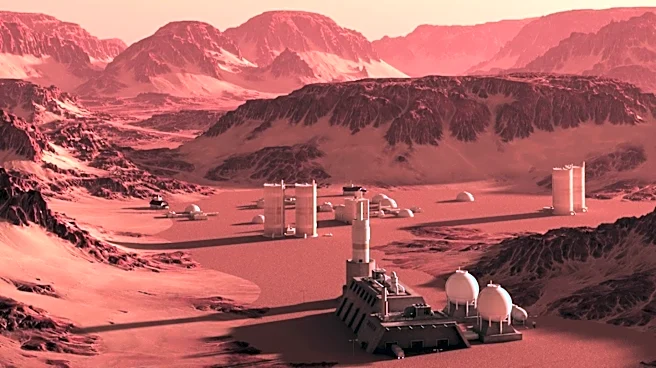
The concept of human colonization on Mars, championed by tech entrepreneurs, is facing skepticism due to practical and financial challenges. Despite ambitious plans by organizations like Mars One, which aimed to establish a self-sustaining colony on Mars, the
project failed to secure necessary funding and eventually declared bankruptcy. The idea of a one-way mission to Mars, initially appealing to thousands, has been criticized for its unrealistic expectations and lack of sustainable business models. The harsh Martian environment, with extreme temperatures and radiation, poses significant risks to human life, making the feasibility of long-term colonization questionable.
Why It's Important?
The skepticism surrounding Mars colonization highlights the broader challenges of space exploration and the limitations of current technology. While the idea of interplanetary colonization captures public imagination, the practicalities of such endeavors remain daunting. The failure of projects like Mars One underscores the need for realistic planning and sustainable funding models in space exploration. This skepticism may influence future investments in space technology and shift focus towards more achievable goals within the realm of space exploration. Additionally, the discussion around Mars colonization raises ethical questions about the prioritization of resources and the potential impact on Earth's environment and society.