
What's Happening?
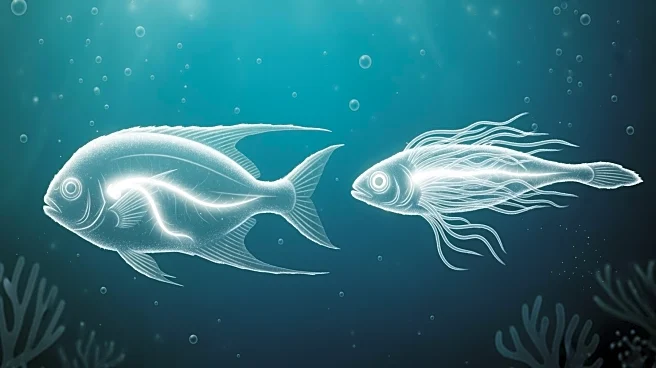
Research has revealed that both Antarctic icefish and Asian noodlefish have independently evolved to live without red blood cells. The study, conducted by H. William Detrich and Chinese scientists, found
that while icefish survive in cold, oxygen-rich Antarctic waters, noodlefish thrive in warmer environments across Asia. Icefish lost their red blood cells due to the deletion of hemoglobin genes, while noodlefish have mutations that render their hemoglobin genes nonfunctional. This discovery highlights the diverse evolutionary strategies fish have developed to adapt to their environments.
Why It's Important?
The findings underscore the role of historical contingency in the evolution of biodiversity. Understanding how different species adapt to their environments can provide insights into evolutionary processes and the factors that drive them. This research could have implications for studying other species that have developed unique adaptations, potentially informing conservation efforts and biodiversity management. Additionally, the study highlights the importance of international collaboration in scientific research, as it combines expertise from different regions to uncover new knowledge about the natural world.
What's Next?
Future research may focus on exploring other species that have developed similar adaptations, potentially uncovering new evolutionary pathways. Scientists may also investigate the genetic mechanisms underlying these adaptations in greater detail, which could lead to a deeper understanding of how organisms evolve in response to environmental pressures. The study's findings could inspire further collaboration between researchers from different countries, fostering a more comprehensive approach to studying biodiversity and evolution.
Beyond the Headlines
The study of icefish and noodlefish offers a glimpse into the complex interplay between genetics and environment in shaping evolutionary outcomes. It raises questions about the potential for other species to develop similar adaptations and the factors that influence these processes. The research also highlights the importance of preserving diverse ecosystems, as they provide valuable opportunities to study evolutionary biology and the mechanisms that drive it. As climate change and human activities continue to impact natural habitats, understanding these processes becomes increasingly critical for conservation efforts.