





What's Happening?
President Trump has issued an executive order, 'Restoring American Saltwater Angling and Recreation,' directing federal agencies to prioritize recreational fishing. The order mandates the Commerce Department to review fisheries guidelines under the Magnuson-Stevens
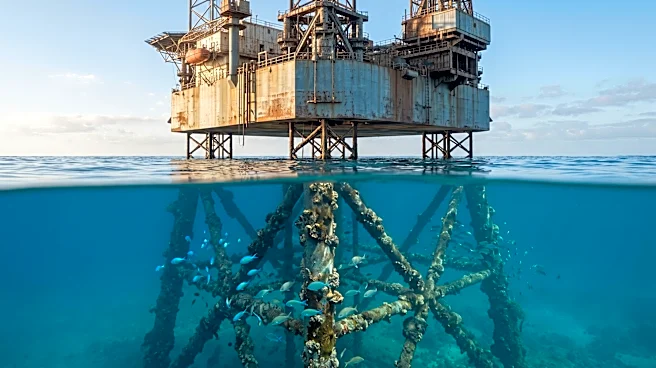
Act, the primary law governing marine fisheries management in U.S. federal waters, to ensure they appropriately account for recreational fishing. Additionally, the Interior Department is instructed to establish a program for converting decommissioned offshore oil and gas structures into permanent artificial reefs. The order also calls for an 'Interagency Shark and Pinniped Depredation Task Force' to address instances where sharks and marine mammals interfere with anglers' catches, and directs agencies to suspend, revise, or rescind regulations that are deemed to overly burden boaters, anglers, and outdoor businesses. This move has been met with praise from the National Marine Fisheries Service, which views it as a step towards stability for the outdoor recreation economy, but has drawn significant criticism from conservation advocates who warn of potential environmental repercussions.
Why It's Important?
This executive order is significant because it signals a shift in federal marine management priorities, potentially favoring recreational fishing interests over established scientific standards and environmental protections. Conservation groups, such as the Marine Conservation Institute and Oceana, express concern that the administration may reinterpret critical terms like 'overfishing' and 'best available science,' potentially undermining decades of progress in marine conservation. The directive to convert offshore oil and gas structures into artificial reefs is particularly contentious; while some rigs could provide habitat, environmentalists from the Center for Biological Diversity and Greenpeace USA argue that these structures were not designed as healthy reefs, can leach harmful chemicals, and may attract fish without necessarily increasing populations, making them easier targets for anglers. Furthermore, the task force on shark and pinniped depredation is seen by Earthjustice as a move to ease restrictions on the shark trade, which could destabilize ocean ecosystems given the critical role sharks play in regulating food webs. The order's broad directive to revise or rescind regulations could also impact existing protections, such as the vessel-speed rule designed to protect endangered North Atlantic right whales, raising fears about increased risks to vulnerable marine species.
What's Next?
Following the executive order, the Commerce Department will proceed with its review of fisheries guidelines under the Magnuson-Stevens Act, and the Interior Department will work on establishing the program for converting offshore oil and gas structures into artificial reefs. The 'Interagency Shark and Pinniped Depredation Task Force' will begin its examination of barriers to shark fisheries, including international agreements and CITES listings. Environmental and conservation organizations are expected to closely monitor these developments and may challenge any regulatory changes that they believe undermine marine protections. Legal challenges are anticipated for any proposed rollbacks of environmental regulations, as conservation advocates have indicated their intent to fight measures that could reduce protected marine areas or weaken species safeguards. The implementation of this order will likely involve ongoing debates between recreational fishing proponents and environmental groups regarding the balance between economic interests and ecological preservation.
Beyond the Headlines
The executive order highlights a deeper ideological conflict regarding environmental policy and resource management in the U.S. It reflects a broader trend by the Trump administration to deregulate and prioritize economic activities, particularly in sectors like energy and recreation, often at the expense of environmental safeguards. The debate over 'best available science' underscores a fundamental disagreement on how scientific evidence should inform policy decisions, with conservationists arguing for strict adherence to scientific consensus and the administration potentially seeking interpretations that align with its policy objectives. The conversion of oil rigs into artificial reefs, while seemingly beneficial, raises ethical questions about the long-term ecological impact of repurposing industrial infrastructure and whether it genuinely contributes to marine health or merely facilitates human exploitation of marine resources. This order could set precedents for future administrations regarding the balance between industry, recreation, and conservation, potentially reshaping the landscape of U.S. marine policy for years to come and influencing international perceptions of U.S. commitment to ocean health.