





What's Happening?
Charlotte Mayor Rob Harrington has proposed the creation of a new working group to oversee the allocation and implementation of $300 million in community benefits promised by the North Carolina Department of Transportation (NCDOT) for west Charlotte.
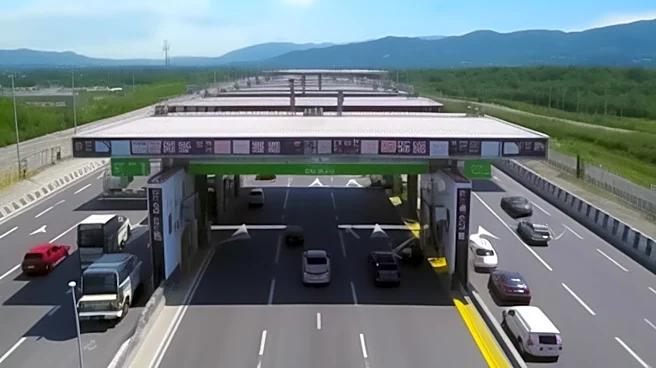
This initiative is directly linked to the Interstate 77 toll lanes project. The NCDOT recently detailed how these funds could be utilized, with a significant portion—at least $150 million—earmarked for a concrete cap over a section of the highway near uptown. Additionally, the state plans to invest in addressing critical community needs such as food deserts and a lack of recreational spaces in the surrounding neighborhoods. City Council member Joi Mayo expressed support for maintaining flexibility in how these goals are pursued, suggesting that solutions for food insecurity could extend beyond traditional grocery stores to include farms and community co-ops. The Charlotte City Council is scheduled to vote on Monday to establish this new working group.
Why It's Important?
This development is significant for Charlotte, particularly for the communities in west Charlotte, as it aims to mitigate the impacts of the I-77 toll lanes project and deliver substantial community improvements. The allocation of $300 million represents a considerable investment in urban infrastructure and social welfare, potentially transforming underserved areas. The proposed concrete cap over the highway could reduce noise pollution and create new public spaces, enhancing the quality of life for residents. Furthermore, addressing food deserts and recreational space deficiencies directly tackles long-standing issues of inequality and access to essential services, which can lead to improved public health outcomes and community well-being. The establishment of a dedicated working group underscores a commitment to transparency and community involvement in the expenditure of these funds, ensuring that the benefits are tailored to the specific needs of the affected population. This initiative could serve as a model for other urban development projects across the U.S. where infrastructure expansion necessitates community compensation and engagement.
What's Next?
The Charlotte City Council is expected to vote on Monday to formally establish the new working group. If approved, this group will likely begin the process of developing detailed plans for the utilization of the $300 million in community benefits. This will involve further engagement with community stakeholders, local organizations, and NCDOT officials to finalize specific projects and timelines. The flexibility advocated by City Council member Joi Mayo suggests that the working group will explore innovative solutions for addressing community needs, potentially leading to pilot programs or partnerships that could be replicated elsewhere. The implementation of these projects will be closely watched by residents and local advocacy groups, who will be keen to ensure that the promised benefits are delivered effectively and equitably. The success of this initiative could influence future infrastructure development strategies and community compensation frameworks in North Carolina and beyond.
Beyond the Headlines
The proposed working group and the $300 million investment highlight a growing trend in urban planning where large-scale infrastructure projects are increasingly coupled with significant community benefit agreements. This approach acknowledges the historical displacement and environmental burdens often placed on marginalized communities by such developments. The emphasis on addressing food deserts and recreational space deficiencies points to a broader recognition of social determinants of health and the need for holistic community development. Ethically, this initiative attempts to balance economic progress with social equity, aiming to rectify past injustices and prevent future ones. Legally, the establishment of a working group provides a structured mechanism for accountability and oversight, ensuring that the NCDOT fulfills its commitments. Culturally, successful implementation could foster greater trust between government entities and local communities, promoting a more collaborative model for urban growth and development.