








What's Happening?
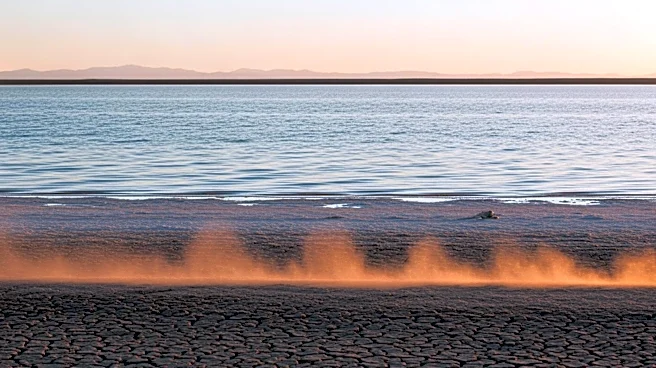
A study conducted by researchers from the Keck School of Medicine of the University of Southern California has found that children living near the Salton Sea experience slower lung function growth compared to those living farther away. The study attributes
this to higher concentrations of salts and contaminants in the air, which are released from the exposed lakebed as the sea shrinks. The findings suggest that living near the Salton Sea is comparable to residing near a freeway in terms of respiratory health risks.
Why It's Important?
The study's findings highlight the environmental and public health challenges associated with the Salton Sea, a shrinking saline lake in Southern California. The exposure to airborne contaminants poses significant health risks, particularly for children, and underscores the need for urgent environmental management and remediation efforts. The research adds to the growing body of evidence on the health impacts of air pollution and could inform policy decisions aimed at improving air quality and public health in the region.
What's Next?
In response to the study, California officials are working on the Salton Sea Management Program, a 10-year plan to address the environmental and health impacts of the drying lake. The program aims to create habitats and reduce dust emissions from the exposed lakebed. Continued research and monitoring are essential to assess the long-term health effects on residents and to guide further interventions. The study's authors also plan to investigate the specific components of the dust that are most harmful.