





What's Happening?
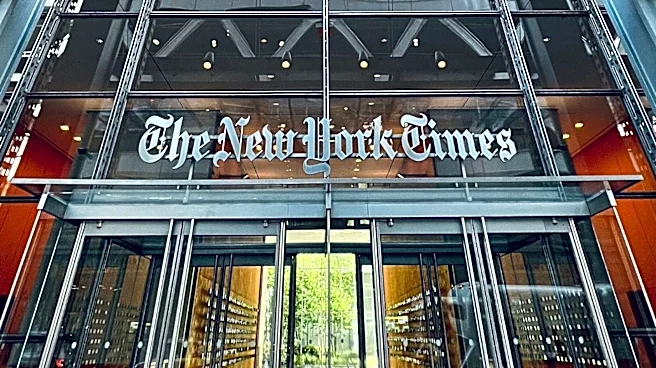
A peer-reviewed study of 1,559 New York Times articles concerning the Gaza conflict has concluded that the newspaper's coverage exhibited a bias against Israel. The study, conducted by Edieal Pinker of the Yale School of Management and published in the academic
journal 'Studies in Conflict & Terrorism,' analyzed Times coverage from October 7, 2023, to June 7, 2024. Pinker's findings suggest that the New York Times disproportionately emphasized Palestinian suffering and violence attributed to Israel, while giving less attention to Israeli casualties and the role of Hamas in the conflict. The study claims that the coverage assigned "near-exclusive agency and responsibility to Israel while diminishing Hamas’s role in sustaining the conflict." It also noted that personal accounts of Palestinian suffering appeared frequently, whereas comparable accounts of Israeli suffering were rare. The New York Times has rejected Pinker's assessment, stating it has covered the war with rigor and reports from all angles.
Why It's Important?
This study's findings are significant for media ethics, journalistic impartiality, and public perception of the Israeli-Palestinian conflict within the U.S. The New York Times is a highly influential news organization, and allegations of bias in its reporting can impact how American audiences understand complex international events. If the study's conclusions are widely accepted, it could lead to increased scrutiny of media coverage of conflicts, potentially affecting the credibility of major news outlets. For U.S. foreign policy, public opinion shaped by media narratives can influence political pressure on policymakers regarding aid, diplomatic efforts, and support for involved parties. A perceived imbalance in reporting could also exacerbate existing divisions within American society regarding the conflict, affecting advocacy groups and community relations. The debate over media bias highlights the challenges of objective reporting in highly charged geopolitical situations and the importance of diverse news sources.
What's Next?
The publication of this study is likely to spark further debate among media critics, academics, and the public regarding the objectivity of news coverage on the Israeli-Palestinian conflict. The New York Times may face continued pressure to address these criticisms, potentially leading to internal reviews of its editorial guidelines or a more explicit defense of its reporting practices. Other media organizations might also re-evaluate their own coverage in light of these findings. Academics and media watchdogs may conduct further studies to corroborate or challenge Pinker's conclusions. This ongoing discussion could influence how future conflicts are covered by major U.S. news outlets, potentially leading to a greater emphasis on balanced reporting and a more explicit acknowledgment of the complexities and multiple perspectives involved in such conflicts. The study's impact could also extend to how news consumers approach and critically evaluate information from various sources.
Beyond the Headlines
The debate surrounding the New York Times' coverage of the Gaza conflict touches upon deeper issues concerning the role of media in shaping geopolitical narratives and the challenges of maintaining objectivity in emotionally charged situations. Beyond the immediate allegations of bias, this study highlights the inherent difficulties journalists face in reporting on conflicts where access is restricted, information is contested, and humanitarian concerns are paramount. The concept of 'balance' itself becomes complex when dealing with power imbalances and differing interpretations of events. This situation also underscores the growing influence of academic studies and media analysis in scrutinizing journalistic practices, moving beyond traditional forms of media criticism. The long-term implication could be a shift in how news organizations approach conflict reporting, potentially leading to more transparent methodologies, a greater emphasis on contextualizing information, and a more explicit discussion of the limitations and perspectives inherent in any news coverage.