






What's Happening?
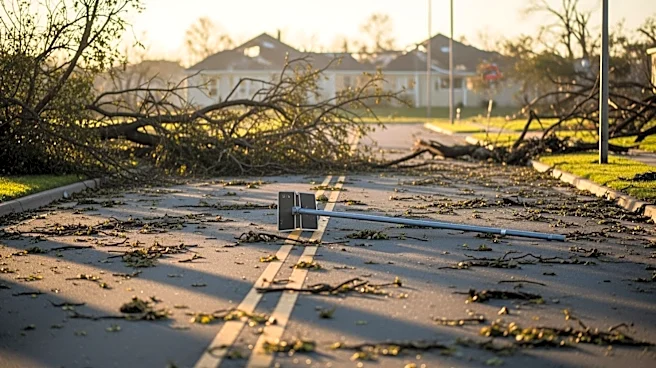
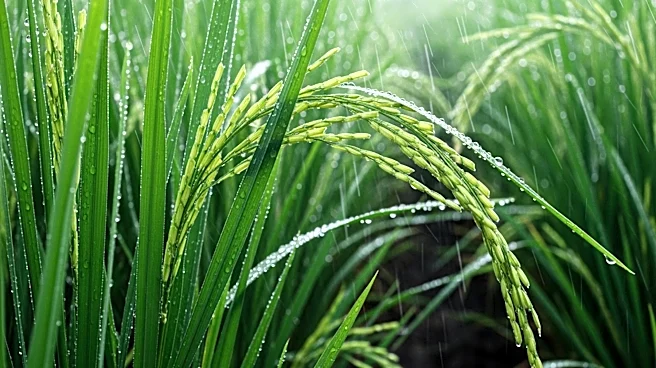
In Tripura, heavy rainfall over a three-day period has caused significant damage to agriculture and horticulture, affecting more than 33,000 farmers. The state recorded an average rainfall of 133.9 mm from April 27 to 29, with the highest precipitation
in Kamalpur and Bishramganj. This has resulted in an estimated crop loss worth Rs 59.17 crore. Approximately 6,105 hectares of the total 58,540 hectares of standing crops have been affected, leading to a production loss of 21,635 metric tonnes. South Tripura is the worst-hit district, with a crop loss of 10,470 metric tonnes. In response, the government has appointed nodal officers at various levels to implement disaster management plans and deployed Quick Response Teams for immediate action. Field officials are using geo-tagging technology to assess crop damage, and efforts are being made to manage drainage to remove excess water from fields.
Why It's Important?
The heavy rainfall and subsequent agricultural damage in Tripura highlight the vulnerability of the region's farming sector to extreme weather events. This situation underscores the need for effective disaster management and climate adaptation strategies to protect the livelihoods of farmers, who are crucial to the state's economy. The financial loss of Rs 59.17 crore is significant, impacting not only the farmers but also the broader agricultural supply chain. The government's response, including the deployment of Quick Response Teams and the use of geo-tagging technology, is critical in mitigating further losses and supporting recovery efforts. The event also raises concerns about food security and the economic stability of the region, emphasizing the importance of sustainable agricultural practices and infrastructure improvements to withstand future climatic challenges.
What's Next?
The India Meteorological Department has forecasted continued heavy rainfall in several districts of Tripura over the next week, which could exacerbate the current situation. The government is advising farmers to adopt crop rotation strategies and consider alternative crops such as pulses, oilseeds, and millets to adapt to changing conditions. Ongoing assessments and drainage management efforts will be crucial in minimizing further damage. The situation calls for increased investment in climate-resilient agricultural practices and infrastructure to better prepare for future weather-related disruptions. Stakeholders, including government agencies and agricultural experts, will need to collaborate to develop long-term strategies to enhance the resilience of the farming community in Tripura.