






What's Happening?
Waste management and battery recycling experts strongly advise against disposing of used batteries in household trash or curbside recycling bins due to significant fire risks and environmental concerns. According to Ryan Nordt, executive director of recycling operations
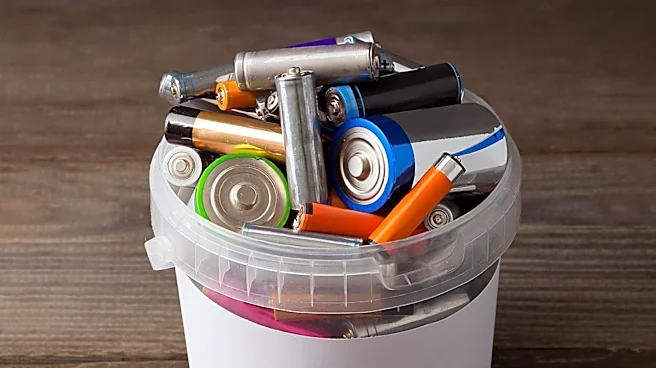
at WM, improperly discarded batteries can be damaged during collection and processing, leading to overheating, sparking, or ignition. The National Waste & Recycling Association estimates approximately 5,000 fires occur annually at recycling facilities due to batteries. Lithium-ion batteries, commonly found in smartphones, laptops, and e-bikes, are a particular concern due to their potential for thermal runaway, a chain reaction causing rapid overheating and fires. Even common alkaline batteries, while sometimes permitted in household trash by local communities, are best recycled through appropriate collection programs.
Why It's Important?
The improper disposal of batteries poses a serious threat to workers, first responders, collection vehicles, and recycling facilities across the U.S. The estimated 5,000 annual fires at recycling facilities highlight a critical safety issue that impacts infrastructure and human lives. Beyond immediate safety, recycling batteries is crucial for recovering valuable materials like zinc-manganese concentrate from alkaline batteries, which can be reused in fertilizers, and lithium, nickel, and cobalt from lithium-ion batteries. This recovery reduces the need for new raw material extraction, lessening environmental impact and promoting a circular economy. The lack of public awareness regarding proper battery disposal methods contributes to these risks, making education and accessible recycling programs vital for public safety and environmental stewardship.
What's Next?
To mitigate these risks, experts recommend storing used batteries in a cool, dry place, away from heat, direct sunlight, moisture, and metal objects, and covering metal ends with clear tape to prevent sparks. For lithium batteries, individual plastic bags are advised. Consumers should check for swelling, cracks, leaks, or burn marks and recycle batteries regularly. The safest option is to utilize appropriate collection programs, which may include participating retailers, municipal recycling centers, or household hazardous waste programs. Organizations like BatterySafetyNow.org and The Battery Network provide resources to find local recycling locations. Continued public education and the expansion of accessible battery recycling infrastructure are essential next steps to address this growing problem.
Beyond the Headlines
The issue of battery disposal extends beyond immediate safety and environmental concerns, touching upon broader themes of consumer responsibility and industrial sustainability. The prevalence of batteries in modern life, from tiny button cells to large electric vehicle power packs, creates a massive waste stream that demands innovative solutions. This challenge highlights the need for product designers to consider end-of-life recycling from the outset, fostering a 'cradle-to-cradle' approach. Furthermore, the economic value of recovered materials from batteries could drive new industries and job creation in the recycling sector, transforming waste into a valuable resource. Addressing this issue effectively requires a concerted effort from consumers, manufacturers, and policymakers to establish a comprehensive and safe battery lifecycle management system.