







What's Happening?
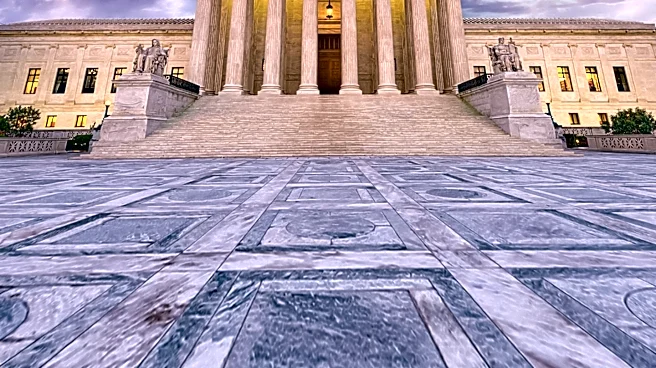
The U.S. Department of Justice (DOJ) has announced a crackdown on 'birth tourism' following a Supreme Court decision that struck down President Trump's executive order on birthright citizenship. Acting Attorney General Todd Blanche described birth tourism as a 'booming
industry' and emphasized the DOJ's commitment to stopping it. The DOJ's assistant attorney general for fraud enforcement, Colin McDonald, highlighted the legal measures already in place to combat such schemes, which often involve fraudulent visa applications. The DOJ has prosecuted several cases in recent years, including a 2020 case involving Chao 'Edwin' Chen, who was sentenced to 37 months in prison for operating a large-scale birth tourism scheme. The U.S. government does not currently track the number of babies born to birth tourists, but estimates suggest that tens of thousands of such births occur annually.
Why It's Important?
The DOJ's initiative to curb birth tourism is significant as it addresses concerns about the exploitation of U.S. immigration laws. Birth tourism allows foreign nationals to secure U.S. citizenship for their children, which can have long-term implications for immigration policy and national security. The crackdown reflects ongoing debates about birthright citizenship and immigration reform in the U.S. By targeting fraudulent practices, the DOJ aims to uphold the integrity of U.S. citizenship and deter illegal activities that exploit the immigration system. This move could impact businesses that facilitate birth tourism and influence future legislative discussions on immigration policies.
What's Next?
The DOJ's focus on birth tourism is likely to lead to increased investigations and prosecutions of individuals and businesses involved in such schemes. The crackdown may prompt legislative efforts to address loopholes in immigration laws that allow for birth tourism. Additionally, the Supreme Court's decision against President Trump's executive order may influence future legal interpretations of the 14th Amendment and birthright citizenship. Stakeholders, including immigration advocacy groups and policymakers, may respond with proposals for comprehensive immigration reform to address the broader implications of birth tourism.