

What's Happening?
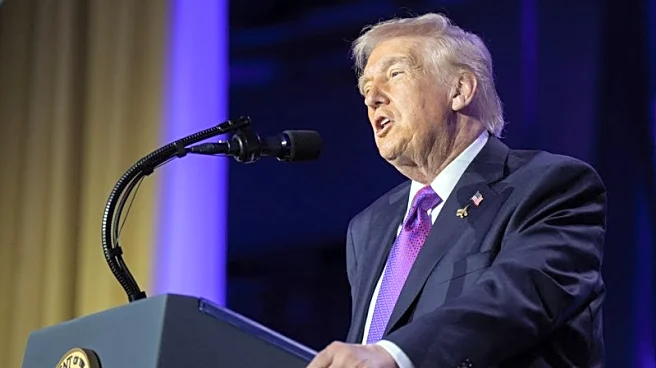
A federal judge has blocked the enforcement of President Trump's executive order that sought to impose new voting requirements on the vote-by-mail states of Oregon and Washington. The order, issued in March, mandated documentary proof of citizenship for voter
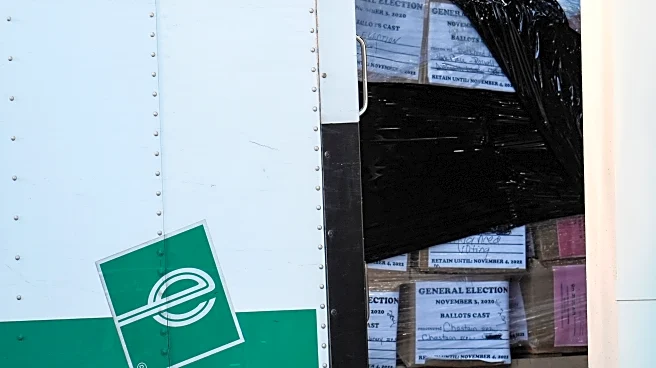
registration and required that all mail ballots be received by election day. U.S. District Judge John H. Chun ruled that these requirements exceeded the president's authority, aligning with similar decisions in Massachusetts and Washington, D.C. The ruling was celebrated by Washington Attorney General Nick Brown as a victory for voters and the rule of law. The executive order also threatened to withhold federal funding from states that did not comply, which officials in Oregon and Washington argued could disenfranchise thousands of voters. During the 2024 general election, Washington counted nearly 120,000 ballots received after election day but postmarked by it, while Oregon received nearly 14,000 such ballots.
Why It's Important?
This ruling underscores the ongoing legal and political battles over voting rights and election integrity in the United States. By blocking the executive order, the court reaffirmed the constitutional principle that states and Congress, not the president, have the authority to regulate federal elections. This decision is significant for Oregon and Washington, which rely exclusively on vote-by-mail systems and could have faced substantial voter disenfranchisement under the order. The ruling also challenges the narrative promoted by President Trump and some Republicans regarding widespread voter fraud by non-citizens, a claim that has been widely debunked. The decision may influence future legal and legislative efforts to regulate voting processes and protect voter access.
What's Next?
The ruling may prompt further legal challenges or appeals from the Trump administration, as well as potential legislative responses from Congress. States that utilize vote-by-mail systems will likely continue to defend their processes against federal overreach. The decision could also influence upcoming elections by reinforcing the validity of mail-in voting and potentially encouraging other states to adopt similar systems. Political leaders and civil rights groups may use this ruling to advocate for broader voting rights protections and reforms at the federal level.