



What's Happening?
A recent study published in the Journal of Psychiatric Research has identified a significant correlation between muscle weakness and the risk of developing dementia in middle-aged and older adults. The research, conducted by Wei Jin and colleagues from
Xinxiang Medical University, utilized data from the English Longitudinal Study of Ageing (ELSA) involving nearly 6,000 participants aged 50 and above. The study found that individuals with weaker muscles, particularly those with low handgrip strength and slower chair-rising times, faced a higher likelihood of dementia diagnosis. The researchers adjusted for body mass index (BMI) to ensure fair comparisons across different body sizes, revealing that muscle weakness is a consistent predictor of cognitive decline regardless of weight.
Why It's Important?
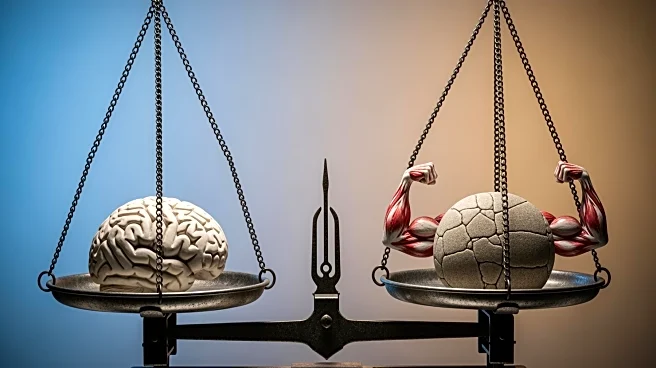
The findings underscore the importance of physical health in cognitive aging, suggesting that maintaining muscle strength could be a key factor in preventing dementia. As dementia rates rise globally, identifying early indicators like muscle weakness could help healthcare providers implement preventative measures. This study highlights the potential for simple, non-invasive tests such as grip strength and chair-rising speed to serve as screening tools for dementia risk. The implications for public health are significant, as interventions targeting muscle strength could delay or reduce the onset of dementia, alleviating the burden on families and healthcare systems.
What's Next?
Future research is needed to explore intervention strategies that could strengthen muscles and potentially delay dementia onset. Clinical trials focusing on strength training exercises may provide insights into effective preventative measures. Additionally, further studies should consider diverse populations to understand the strength-dementia relationship across different ethnic and age groups. The research team suggests that comprehensive approaches targeting both upper and lower limb strength could be beneficial in supporting brain health.
Beyond the Headlines
The study opens discussions on the biological mechanisms linking muscle strength and cognitive health, such as the role of inflammation and neural interconnectivity. Understanding these connections could lead to more targeted therapies for dementia prevention. Moreover, the study's findings may influence public health policies, encouraging the integration of physical fitness programs in aging populations to enhance cognitive resilience.