







What's Happening?
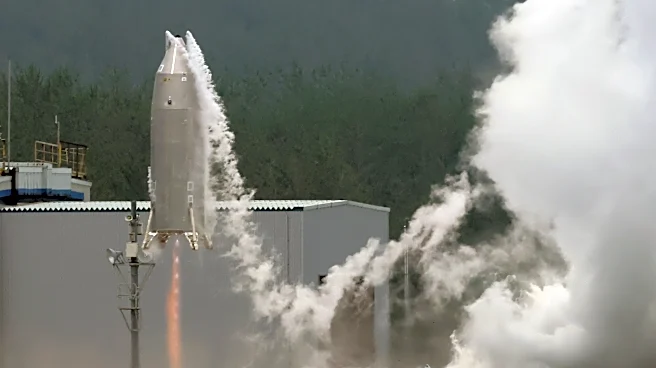
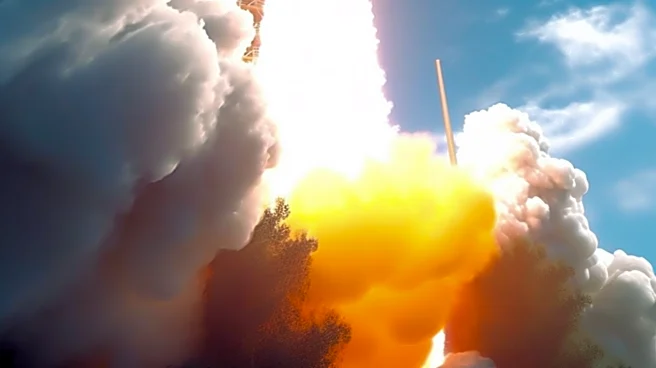
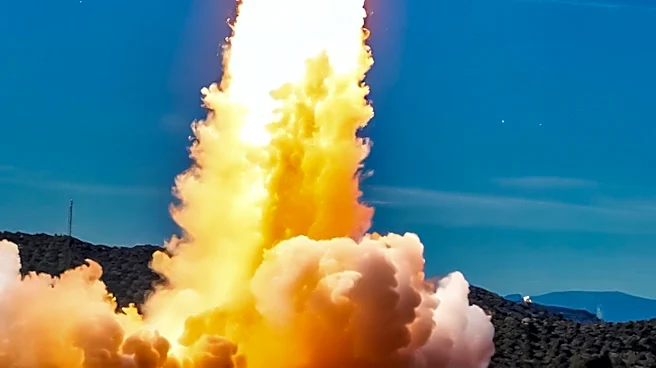
Japan's Aerospace Exploration Agency (JAXA) has successfully conducted the first test flight of its experimental reusable rocket, RV-X. The test, which took place at the Noshiro Testing Center, involved the rocket lifting off, hovering, and landing safely.
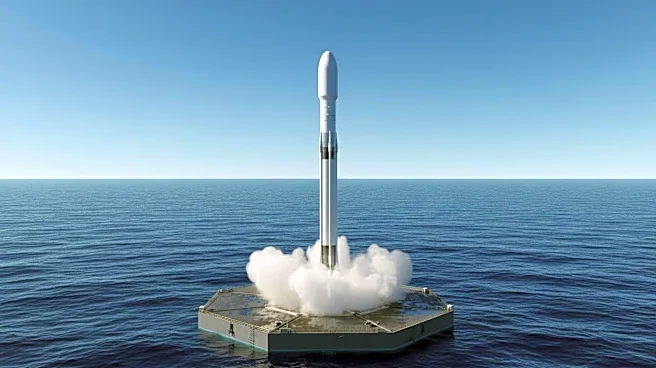
This development marks a significant step for Japan in its efforts to reduce launch costs and compete in the global space market, which is currently dominated by companies like SpaceX. The RV-X is part of Japan's strategy to develop a cost-effective successor to its current H3 series rockets.
Why It's Important?
The successful test of a reusable rocket is crucial for Japan's ambitions in the space industry. Reusable rockets can significantly lower the cost of space missions, making space exploration and satellite deployment more accessible. This advancement positions Japan as a competitive player in the global space market, potentially leading to increased collaboration and innovation in space technology. It also reflects Japan's commitment to enhancing its national security and technological capabilities.
What's Next?
JAXA plans to conduct further tests, aiming to send the RV-X to higher altitudes. The agency is also collaborating with France and Germany on developing reusable rocket technology. These efforts are expected to lead to the development of a new generation of rockets that can support a wide range of space missions, from scientific research to commercial satellite launches.