







What's Happening?
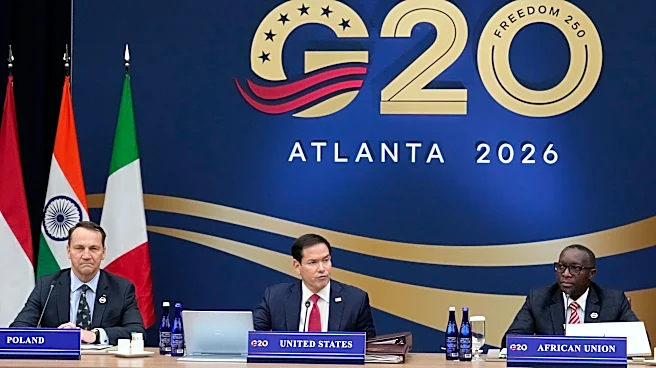
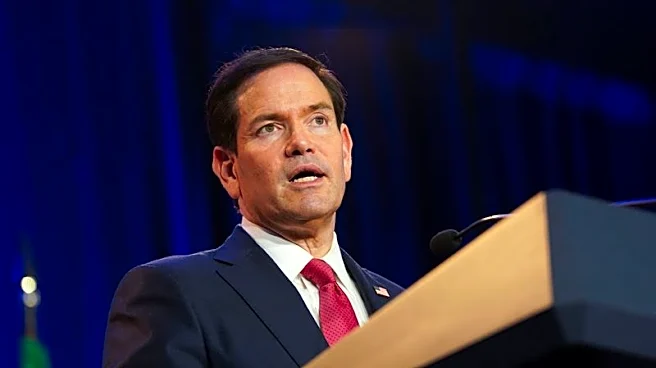
The United States, South Korea, and Japan have reiterated their firm commitment to the complete denuclearization of North Korea. This reaffirmation occurred during talks on the sidelines of a G20 meeting in Atlanta, Georgia, involving US Secretary of State Marco
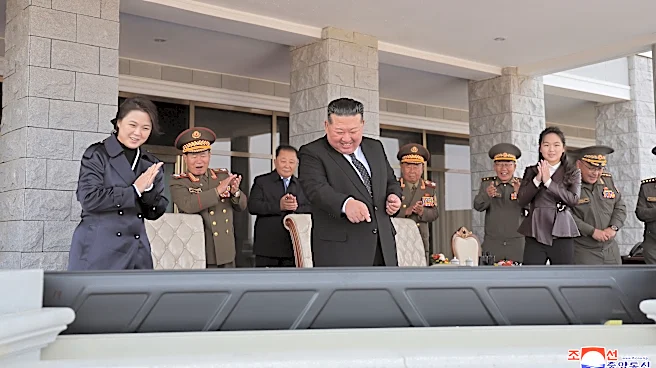
Rubio, South Korean Foreign Minister Cho Hyun, and Japanese counterpart Toshimitsu Motegi. The three nations also pledged full implementation of UN Security Council resolutions, which include prohibiting revenue streams for North Korea's nuclear and ballistic missile programs. This development comes amidst growing speculation about a potential meeting between President Trump and North Korean leader Kim Jong-un at the upcoming APEC summit in China, with President Trump having made repeated overtures for nuclear talks. North Korea, supported by Russia and China, has enshrined its status as a nuclear-armed state in law, consistently declaring its atomic arsenal permanent and irreversible, despite long-running UN sanctions.
Why It's Important?
This joint statement underscores the persistent international concern over North Korea's nuclear ambitions and the ongoing efforts to achieve its denuclearization. For the U.S., maintaining a united front with key allies like South Korea and Japan is crucial for regional stability and global non-proliferation efforts. The potential meeting between President Trump and Kim Jong-un, if it materializes, could significantly alter the diplomatic landscape, offering a pathway for dialogue but also carrying risks of legitimizing North Korea's nuclear status if not handled carefully. The commitment to enforcing UN sanctions aims to pressure Pyongyang economically, but North Korea's legal declaration of its nuclear status indicates a deep-seated resistance to disarmament, making any diplomatic breakthrough challenging. The outcome of these diplomatic maneuvers will have profound implications for security in East Asia and the broader international community.
What's Next?
Speculation continues regarding a potential meeting between President Trump and North Korean leader Kim Jong-un at the upcoming APEC summit in China. President Trump has consistently expressed openness to such a meeting, even acknowledging North Korea as 'sort of a nuclear power' last year. South Korea's President Lee Jae-myung has suggested a phased approach, proposing a freeze of North Korea's nuclear program in exchange for sanctions relief, rather than immediate elimination. However, critics argue that this approach risks tacitly accepting North Korea as a nuclear-armed state. The U.S., South Korea, and Japan will likely continue to coordinate their strategies to pressure North Korea while remaining open to diplomatic engagement, with the enforcement of UN Security Council resolutions being a key component of their approach.
Beyond the Headlines
The ongoing diplomatic efforts surrounding North Korea highlight a complex geopolitical challenge with deep historical roots. The repeated overtures for talks from President Trump, coupled with his scaling back of military drills with South Korea, signal a shift in U.S. foreign policy towards a more direct, albeit unpredictable, engagement strategy. The debate over whether to seek a 'freeze' versus 'complete denuclearization' reflects a fundamental disagreement on how to manage a nuclear-armed North Korea. This situation also brings into focus the role of China and Russia, who back North Korea and complicate international efforts to enforce sanctions. The long-term implications could involve a redefinition of regional security alliances and a potential precedent for how the international community deals with states that develop nuclear weapons despite international condemnation.