
What's Happening?
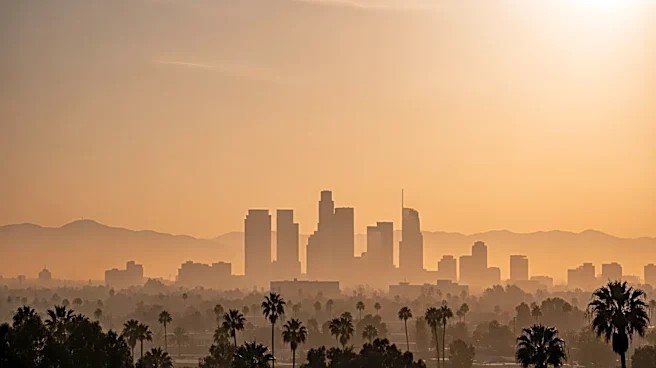
Southern California has experienced its smoggiest first five months of the year in over a decade, with 39 days of unhealthful air quality due to high ozone levels. The South Coast air basin, which includes
Los Angeles, Orange, Riverside, and San Bernardino counties, has been significantly affected. The South Coast Air Quality Management District attributes the high ozone levels to early heat waves, with temperatures reaching the mid-80s to high 90s, breaking several daily records. March was particularly warm, with Riverside experiencing 13 days above 90 degrees. The region's millions of gas-powered vehicles contribute to smog formation, exacerbated by the area's sunshine and geographical features that trap pollution.
Why It's Important?
The increase in smog poses significant health risks to the approximately 18 million residents in the affected areas, potentially triggering asthma attacks and other respiratory illnesses. This situation highlights the ongoing challenge of meeting federal air quality standards for ozone, despite decades of regulatory efforts to reduce emissions. The early onset of smoggy conditions could indicate a particularly severe year for air quality, raising concerns among environmental advocates and public health officials. The situation underscores the need for continued efforts to transition to cleaner energy sources and reduce reliance on fossil fuels.
What's Next?
Air quality officials are urging residents to monitor pollution levels and limit outdoor activities during high smog days. The South Coast Air Quality Management District continues to work on strategies to reduce emissions, including promoting zero-emission appliances and vehicles. Environmental groups are calling for increased incentives to support these transitions. The ongoing situation may prompt further regulatory actions and public awareness campaigns to address the root causes of smog and improve air quality in the region.
Beyond the Headlines
The persistent smog problem in Southern California reflects broader environmental and public health challenges associated with climate change and urbanization. The region's struggle to meet air quality standards highlights the complex interplay between natural weather patterns and human activities. Long-term solutions may require significant shifts in transportation, energy production, and urban planning to create sustainable and healthy living environments. The situation also raises ethical questions about environmental justice, as lower-income communities often bear the brunt of pollution-related health impacts.