




What's Happening?
Kenya has initiated a 42-day countdown towards being declared Ebola-free, following the discharge of its last Ebola patient. This significant step comes after nine individuals were infected when a man traveled from the Democratic Republic of Congo (DRC)
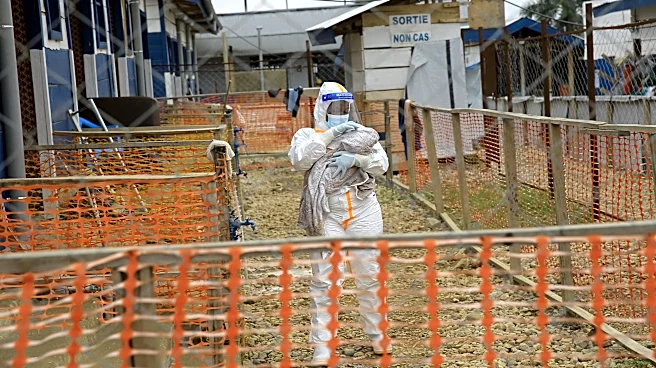
to Kenya in early October. The outbreak resulted in two deaths, including the index patient and a 65-year-old relative. Seven patients have successfully recovered, and all contacts have completed their follow-up monitoring. Kenya's Cabinet Secretary of Health, Aden Duale, MBA, confirmed these developments in a media briefing. The Africa Centres for Disease Control and Prevention Director-General, Jean Kaseya, MD, MPH, praised Kenya's robust public health response, highlighting its effectiveness in early detection, contact tracing, clinical care, and community engagement. Kenya is the third African nation outside the DRC to experience a case from the Bundibugyo strain in the current outbreak, with Nigeria having one case and Uganda recently declared Ebola-free after 20 cases.
Why It's Important?
This development is crucial as it demonstrates the effectiveness of rapid and comprehensive public health interventions in containing highly contagious diseases like Ebola. Kenya's successful management of the outbreak provides a valuable case study for other nations in Africa and globally, particularly in regions prone to such health crises. The ability to quickly identify, isolate, and treat cases, alongside thorough contact tracing and community engagement, is vital in preventing widespread transmission and minimizing fatalities. The praise from the Africa CDC underscores the importance of strong national health systems and international collaboration in managing cross-border health threats. A swift resolution to an Ebola outbreak not only saves lives but also prevents potential economic disruption and maintains public trust in health authorities. This success can bolster confidence in regional health security frameworks and encourage continued investment in public health infrastructure.
What's Next?
Kenya will now undergo a 42-day period, equivalent to two incubation cycles of the Ebola virus, without any new cases to be officially declared Ebola-free. During this time, sustained surveillance and vigilance will be critical to ensure no new infections emerge. Health authorities will likely maintain heightened monitoring for any suspicious cases and continue to educate the public on preventive measures. The experience gained from this outbreak will likely inform future public health strategies and emergency preparedness plans in Kenya. International partners, including the Africa CDC, will continue to support Kenya in its post-outbreak surveillance efforts and in strengthening its overall health security. This period will also be an opportunity to assess and refine existing protocols for managing infectious disease outbreaks, ensuring readiness for future health challenges.
Beyond the Headlines
The successful containment of Ebola in Kenya highlights the broader implications of global health security and the interconnectedness of nations. The initial case, stemming from travel from the DRC, underscores the constant threat of disease transmission across borders, especially in a highly mobile world. This event reinforces the need for robust international health regulations and collaborative efforts to monitor and respond to outbreaks at their source. Furthermore, it emphasizes the critical role of community engagement and public trust in health initiatives. When communities are informed and involved, compliance with public health measures, such as quarantine and contact tracing, significantly improves. This success story could also serve as a model for addressing other infectious diseases, demonstrating that with adequate resources, political will, and coordinated action, even the most formidable health threats can be managed effectively.