



What's Happening?
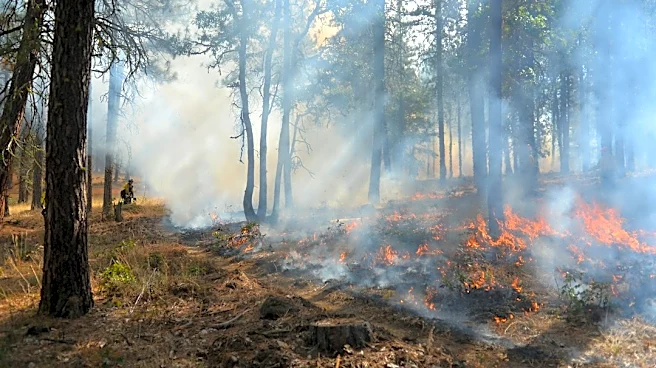
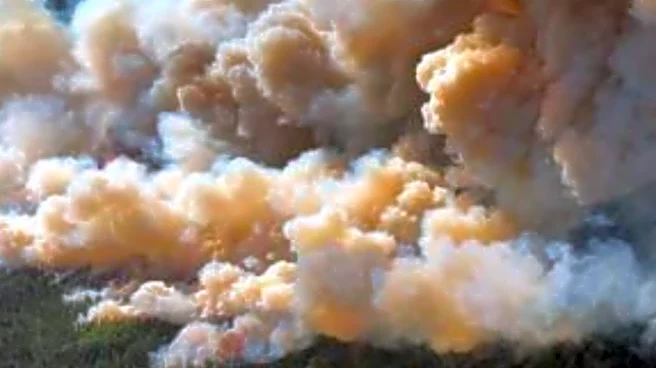
The Wild River Fire, located approximately seven miles southeast of Gorham in the White Mountain National Forest, has expanded to 1,000 acres and is only 11% contained. The fire, first spotted on Sunday afternoon, is actively burning in timber, snags,
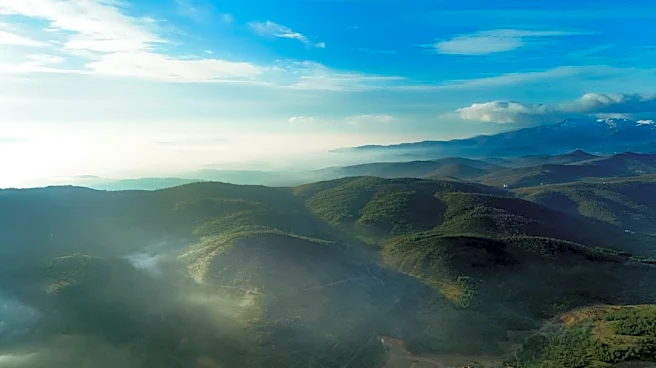
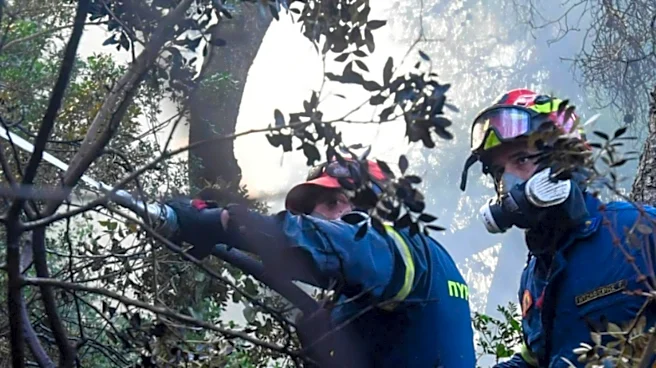
and leaf litter. Firefighters are facing significant challenges due to the steep and rugged terrain, which makes access difficult. Drought conditions in the area have exacerbated the situation, drying out the mountains and providing ample fuel for the blaze. The federal government has deployed 50 personnel, along with drone and helicopter assistance, to combat the fire. Smoke from the fire may be visible in surrounding communities, but there are currently no significant threats to life or property.
Why It's Important?
The expansion of the Wild River Fire to 1,000 acres marks it as an uncommonly large wildfire for the White Mountain National Forest, highlighting the increasing vulnerability of even historically less fire-prone regions to significant blazes. The challenging terrain and ongoing drought conditions underscore the difficulties faced by firefighting efforts and the potential for such fires to grow rapidly. While there are no immediate threats to life or property, large wildfires can have long-term ecological impacts, affecting forest health, wildlife habitats, and air quality in surrounding areas. The federal government's involvement and the use of advanced resources like drones and helicopters demonstrate the seriousness of the situation and the commitment to containing the fire, but also point to the escalating resources required to manage these events.
What's Next?
Firefighters will continue their efforts to establish a perimeter around the Wild River Fire, with containment remaining a primary goal. The U.S. Forest Service is investigating the cause of the fire, which is currently believed to be human-caused. Public advisories include urging drivers to slow down and turn on headlights if encountering smoke, and to avoid flying personal drones near the fire to prevent interference with aerial operations. The ongoing drought conditions suggest that the risk of further fire spread will persist, requiring sustained monitoring and response. The incident may also prompt a review of fire prevention strategies and public awareness campaigns in the White Mountain National Forest and similar regions to mitigate future human-caused ignitions.
Beyond the Headlines
The Wild River Fire's unusual size for the White Mountain National Forest could signal a broader trend of changing wildfire patterns in regions not traditionally associated with large-scale blazes. This development may be linked to shifting climate patterns, including prolonged drought conditions, which are increasing the flammability of forests across the U.S. The fire also highlights the critical role of human activity in igniting wildfires, even in remote areas, underscoring the need for enhanced public education and responsible recreation. The challenges posed by rugged terrain and the reliance on advanced technology like drones for firefighting illustrate the evolving nature of wildfire management, demanding innovative solutions and significant resource allocation to protect natural landscapes and nearby communities.