



What's Happening?
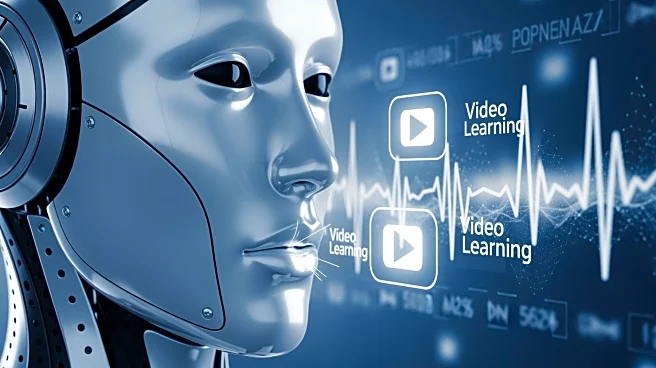
Researchers at Columbia Engineering have developed a robot that can learn facial lip motions for speech and singing by watching YouTube videos. This robot, equipped with 26 facial motors, first learned to use its facial features by observing its reflection
in a mirror. It then advanced to imitating human lip motion by analyzing hours of video content. This development marks a significant step in humanoid robotics, focusing on facial affect as a crucial component for human-robot interaction. The robot's ability to articulate words in various languages and sing demonstrates its potential applications in fields like entertainment, education, and elder care.
Why It's Important?
The ability of robots to mimic human facial expressions and lip movements is a breakthrough in making humanoid robots more relatable and effective in human interaction. This advancement could enhance the use of robots in customer service, healthcare, and personal assistance, where human-like interaction is beneficial. The development addresses the 'Uncanny Valley' challenge, where robots often appear lifeless due to unnatural facial movements. By improving facial affect, robots can better connect with humans, potentially increasing their acceptance and integration into daily life.