


What's Happening?
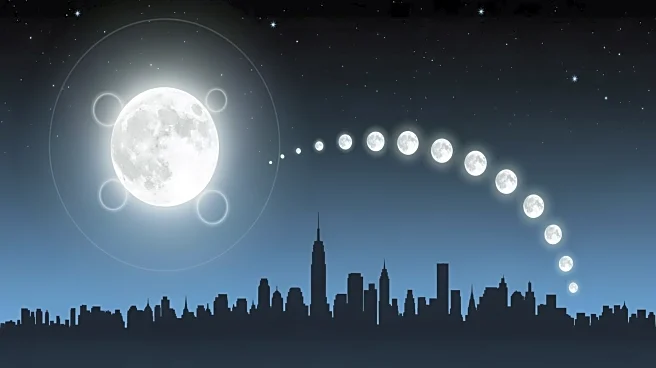
In 2026, New Yorkers will experience a total of 13 full moons, including a blue moon, three supermoons, and both a total and partial lunar eclipse. The year will begin with the full Wolf Moon, which was the first supermoon of the year, occurring on January
3. The full Snow Moon will follow on February 1, reaching peak illumination at 5:09 p.m. ET. March will feature the full Worm Moon on March 3, coinciding with a total lunar eclipse visible across the Americas, East Asia, Australia, and the Pacific. The year will also see a blue moon in May, marking the second full moon in a single calendar month. The supermoons will occur in January, November, and December, with the final supermoon being the full Cold Moon on December 23.
Why It's Important?
The occurrence of multiple supermoons and eclipses in 2026 provides a unique opportunity for astronomical observation and public engagement with celestial events. Supermoons, which appear larger and brighter due to the moon's proximity to Earth, can captivate public interest and inspire educational activities related to astronomy. The total lunar eclipse in March offers a rare chance for people in the Americas and other regions to witness a significant astronomical event. These events can also have cultural significance, as they are often tied to folklore and traditions. Additionally, the blue moon in May adds to the year's astronomical highlights, as such events are relatively rare, occurring approximately every two to three years.
What's Next?
As the year progresses, astronomers and enthusiasts will prepare for each full moon and eclipse, organizing viewing events and educational programs. The total lunar eclipse in March will likely attract significant attention, with observatories and science centers hosting special events to facilitate public viewing. The supermoons in November and December will also be anticipated events, providing opportunities for photography and public engagement. As these celestial events unfold, they will continue to inspire interest in astronomy and the natural world.