



What's Happening?
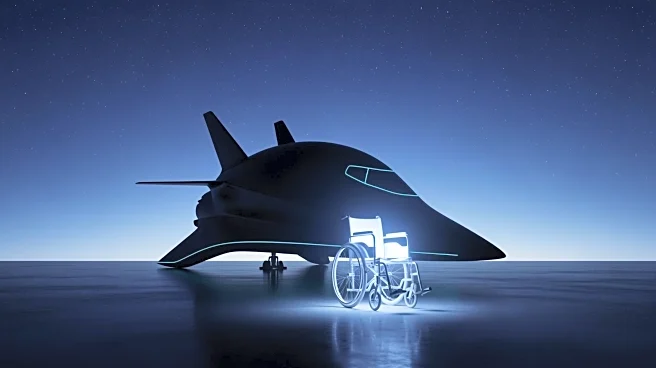
Blue Origin has announced that it is targeting December 18 for its NS-37 mission, which will mark a historic moment in space travel as it includes a wheelchair user among its passengers. Michaela Benthaus, an aerospace engineer at the European Space Agency,
will be part of the six-person crew. Benthaus, who has used a wheelchair since a spinal cord injury in 2018, will join other passengers including investor Joey Hyde, aerospace engineer Hans Koenigsmann, entrepreneur Neal Milch, investor Adonis Pouroulis, and space enthusiast Jason Stansell. The mission will launch from Blue Origin's West Texas site, with the New Shepard vehicle taking the crew on a brief suborbital journey. This mission represents the 37th flight of the New Shepard, a reusable vehicle consisting of a crew capsule and a rocket.
Why It's Important?
This mission is significant as it represents a step forward in making space travel more inclusive and accessible. By including a wheelchair user, Blue Origin is setting a precedent for future space missions to consider broader accessibility. This could influence other space companies and agencies to prioritize inclusivity in their missions. The participation of Michaela Benthaus highlights the potential for individuals with disabilities to engage in space exploration, challenging traditional barriers and expanding the demographic of space travelers. This mission could inspire policy changes and technological innovations aimed at accommodating a wider range of physical abilities in space travel.
What's Next?
Following the NS-37 mission, Blue Origin may continue to explore ways to enhance accessibility in its spaceflights. The success of this mission could lead to increased demand for inclusive space travel experiences, prompting other companies to follow suit. Additionally, the mission's outcome may influence future designs of spacecraft to better accommodate passengers with disabilities. Stakeholders in the aerospace industry, including policymakers and engineers, may begin to prioritize accessibility in their planning and development processes.
Beyond the Headlines
The inclusion of a wheelchair user in a space mission raises important ethical and cultural questions about accessibility and representation in high-profile fields like space exploration. It challenges societal perceptions of who can be a space traveler and may lead to broader discussions about inclusivity in other areas of science and technology. This mission could also have long-term implications for educational and career opportunities for individuals with disabilities, encouraging more inclusive practices in STEM fields.