



What's Happening?
Purdue University has developed a patent-pending method called Surface Touch Extraction Imaging (STEi) that eliminates the need for sample preparation in multiomics workflows. This innovation addresses a significant bottleneck in laboratory science, saving
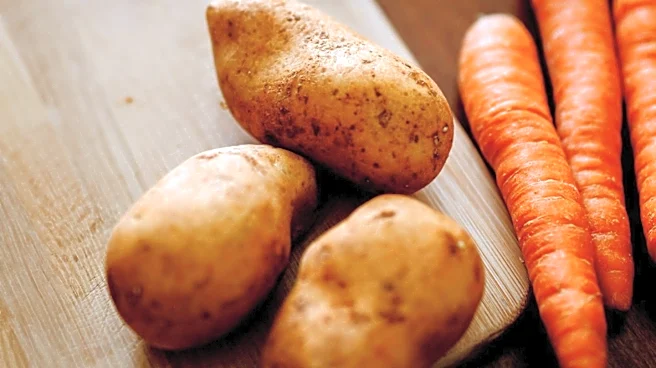
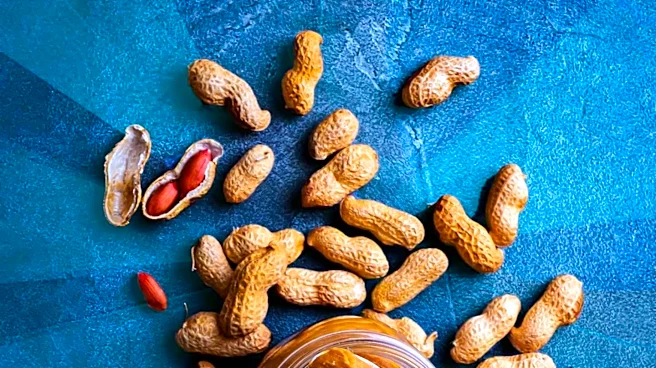
time and resources. STEi allows for the spatial analysis of irregular surfaces, such as tissue biopsies or food items, without cutting, grinding, or destroying the sample. The method involves an automated process where a pressure-controlled probe briefly touches the sample surface, allowing proteins and lipids to diffuse into an extraction solution within seconds. An integrated camera/imaging module scans the sample, and software computes a path for the probe, registering molecular data back to the original surface coordinates to generate spatial heat maps. This approach preserves the spatial context of chemicals, providing a detailed chemical portrait of the sample. The research team, led by Christina Ferreira, is seeking partners for hardware optimization, software integration, and further validation experiments.
Why It's Important?
The STEi method holds significant importance for various U.S. industries and scientific fields, particularly food safety, toxicology, and drug development. By eliminating sample preparation, STEi drastically reduces the time and cost associated with traditional LC-MS/MS analysis, which often involves destructive and labor-intensive steps. This efficiency gain can accelerate research and development cycles, bringing new products and insights to market faster. For food safety, STEi can quickly detect contaminants on food surfaces and packaging, monitor spoilage non-destructively, and provide detailed lipid profiling, addressing critical gaps in existing methods. In toxicology, it can map the metabolic impact of drugs and chemicals across organ tissues, offering a more precise understanding of drug distribution and potential side effects. The ability to analyze samples without destruction also allows for repeated measurements over time, providing dynamic insights into biological and chemical changes.
What's Next?
The Purdue team is actively seeking industry partners to further develop and commercialize STEi. This includes optimizing hardware, integrating software for 3D path planning, and conducting more validation experiments across diverse applications like food spoilage monitoring, food packaging contamination detection, and additional toxicology studies. They also plan to explore regulatory alignment with U.S. Food and Drug Administration (FDA) and U.S. Environmental Protection Agency (EPA) analytical frameworks for selected applications. Successful partnerships and regulatory approvals will be crucial for the widespread adoption of STEi. The technology's potential to streamline laboratory processes and provide more comprehensive data suggests it could become a standard tool in various analytical laboratories, leading to improved product safety, enhanced research capabilities, and more efficient scientific investigations.
Beyond the Headlines
Beyond its immediate applications, STEi represents a broader shift towards non-destructive and automated analytical techniques in scientific research. This innovation could foster a new era of 'smart labs' where complex analyses are performed with minimal human intervention and maximum data integrity. The preservation of spatial context in samples is particularly profound, as it allows scientists to understand not just what chemicals are present, but precisely where they are located, which is critical for understanding biological functions and contaminant distribution. This could lead to more targeted interventions in medicine and more precise quality control in manufacturing. Furthermore, by making complex analyses accessible to less experienced staff, STEi democratizes advanced scientific tools, potentially expanding the pool of researchers capable of conducting high-level multiomics studies and accelerating scientific discovery across various disciplines.