







What's Happening?
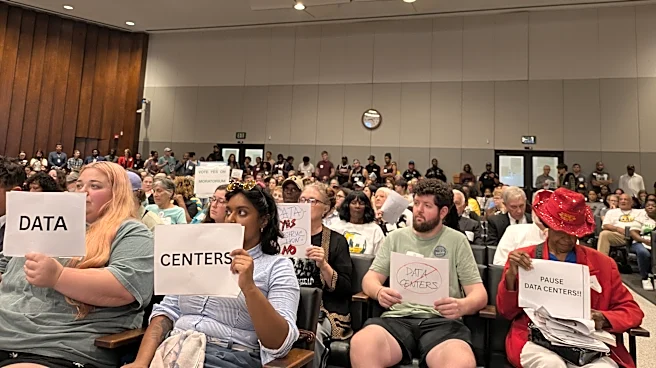
The Lexington City Council has voted to extend a temporary ban, or moratorium, on data center construction within the city until October 2027. This decision comes as local governments across Kentucky grapple with how to regulate hyperscale data centers.
Concurrently, Mercer County Fiscal Court unanimously rejected proposed regulations that would have permitted hyperscale data centers near a coal-fired power plant, citing proximity to the historic Shaker Village of Pleasant Hill. In Carroll County, ethics complaints have been filed against city council members regarding potential conflicts of interest in land deals for proposed data centers. These local actions are taking place amidst calls from over 60 Kentuckians for state lawmakers to implement more comprehensive regulations for large data centers, rather than leaving the burden solely on local authorities. State Representatives Adam Moore (D-Lexington) and Josh Bray (R-Mount Vernon) are reportedly preparing legislation on data center regulations for the upcoming legislative session.
Why It's Important?
The extension of Lexington's moratorium signifies a growing cautious approach by local governments in Kentucky towards the rapid expansion of hyperscale data centers. These facilities are known for their significant demands on electricity and land, raising concerns among residents and officials about potential impacts on utility rates, rural landscapes, and natural resources. The rejection of data center regulations in Mercer County, driven by historical preservation concerns, highlights the diverse range of issues local communities are weighing. The ethics complaints in Carroll County underscore potential governance challenges and the need for transparency in development deals involving large corporations. The push for state-level legislation indicates a recognition that the scale and complexity of data center development may exceed the regulatory capacity of individual local governments, suggesting a potential shift towards more unified state oversight to balance economic development with environmental and community protection.
What's Next?
With Lexington's moratorium in place until October 2027, no new data center construction will proceed in the city during this period, allowing time for the development of comprehensive regulations. State lawmakers, including Representatives Moore and Bray, are expected to introduce legislation concerning data center regulations in the next legislative session. This could lead to statewide standards that address concerns about energy consumption, land use, and economic impact, potentially alleviating the regulatory burden on local governments. Communities like Christian County are moving forward with their own proposed regulations, while others, such as Georgetown in Scott County, are considering outright bans. The outcomes of these local and state legislative efforts will shape the future landscape of data center development in Kentucky, influencing investment decisions by technology companies and impacting local economies and environments.
Beyond the Headlines
The ongoing debate and regulatory actions surrounding data centers in Kentucky reflect a broader national tension between technological advancement and local community interests. The immense power demands of hyperscale data centers raise questions about energy infrastructure capacity, the transition to renewable energy sources, and the potential for increased utility costs for residents. The preservation concerns in Mercer County highlight the challenge of balancing economic development with the protection of historical and cultural sites. Furthermore, the ethics complaints in Carroll County point to the critical need for robust governance frameworks and conflict-of-interest policies when local officials engage with powerful corporate entities. This situation could catalyze a re-evaluation of how states and municipalities approach large-scale industrial development, emphasizing community engagement, environmental impact assessments, and transparent decision-making processes to ensure sustainable growth.