
What's Happening?
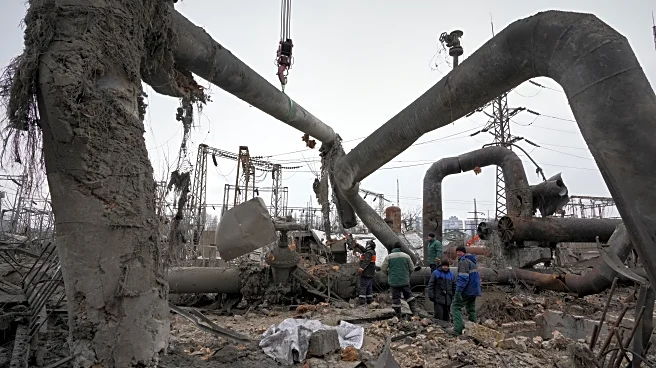
Russia has fired an Oreshnik intermediate-range ballistic missile (IRBM) at critical infrastructure in Ukraine, according to Ukrainian officials. The strike, which occurred on the night of January 8-9,
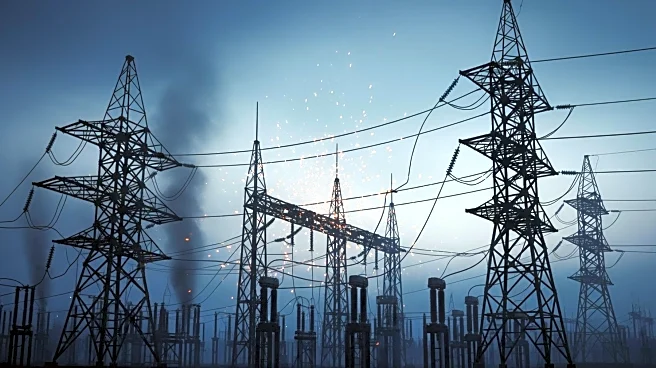
2026, targeted civilian facilities in the Lviv region, damaging production facilities for unmanned aerial vehicles and power infrastructure. The Ukrainian Air Force reported a missile alert across the country, with explosions recorded in Lviv. The Security Service of Ukraine released images of missile components, indicating a deliberate attack on life support infrastructure amid adverse weather conditions. Russia's Ministry of Defense confirmed the missile launch, claiming it targeted facilities supporting Ukraine's defense industry.
Why It's Important?
This missile strike represents a significant escalation in the ongoing conflict between Russia and Ukraine, with potential implications for regional stability. The use of an IRBM highlights Russia's willingness to employ advanced military capabilities against Ukraine, raising concerns about the potential for further escalation. The attack on critical infrastructure could disrupt Ukraine's defense capabilities and impact civilian life, exacerbating the humanitarian situation. The international community, particularly NATO and the EU, faces increased pressure to respond to Russia's aggressive actions, which threaten European security and challenge international norms.
What's Next?
The international response to this missile strike will be crucial in shaping the future of the conflict. NATO and EU member states may consider enhancing their support for Ukraine and implementing measures to deter further Russian aggression. Diplomatic efforts are likely to intensify, with the U.S. and its allies seeking to address the security threat and prevent further escalation. The situation remains dynamic, with potential for additional military actions or diplomatic resolutions. The incident may also influence ongoing peace negotiations and discussions on regional security arrangements.
Beyond the Headlines
The attack raises broader questions about the use of advanced military technologies in regional conflicts and the implications for global security. It highlights the challenges of protecting civilian infrastructure in conflict zones and the humanitarian impact of such strikes. The incident may prompt discussions on arms control and the need for international mechanisms to prevent the proliferation of missile technologies. Long-term, this development could influence global security policies and efforts to address emerging threats.