






What's Happening?
A research team led by Dr. Hyun-Soo Cho at the Korea Research Institute of Bioscience and Biotechnology has identified a key mechanism behind the resistance of colorectal cancer cells to the chemotherapy drug 5-fluorouracil (5-FU). The study found that
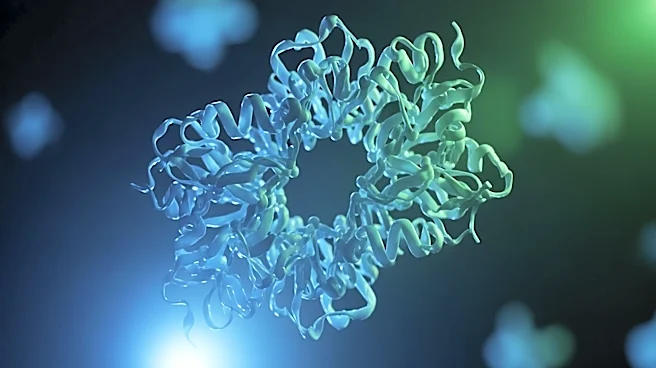
the protein EHMT2 plays a significant role in this resistance. By inhibiting EHMT2, researchers were able to restore the sensitivity of cancer cells to 5-FU, leading to increased cell death and reduced tumor growth. This discovery could lead to new therapeutic strategies to overcome drug resistance in colorectal cancer and potentially other cancers treated with 5-FU.
Why It's Important?
The findings of this study are significant as they offer a potential new approach to enhance the effectiveness of existing cancer treatments. Drug resistance is a major challenge in cancer therapy, often leading to treatment failure and disease recurrence. By targeting EHMT2, it may be possible to improve patient outcomes without the need for entirely new drugs. This could have broad implications for the treatment of various cancers, including gastric, pancreatic, and breast cancers, which are also treated with 5-FU.
What's Next?
Further research and clinical trials will be necessary to validate these findings and determine the safety and efficacy of EHMT2 inhibitors in combination with 5-FU in a clinical setting. If successful, this approach could be integrated into existing treatment protocols, offering a new avenue for patients who have developed resistance to standard chemotherapy.