
What's Happening?
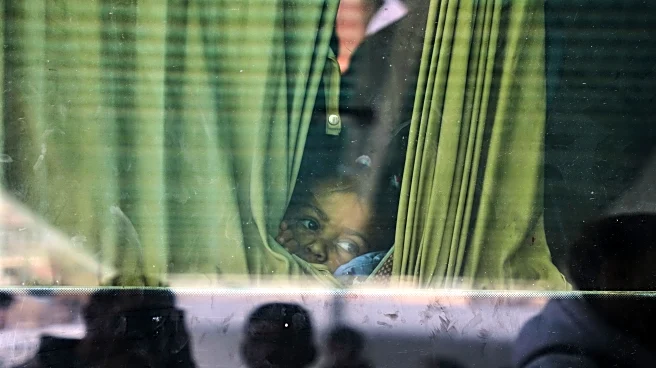
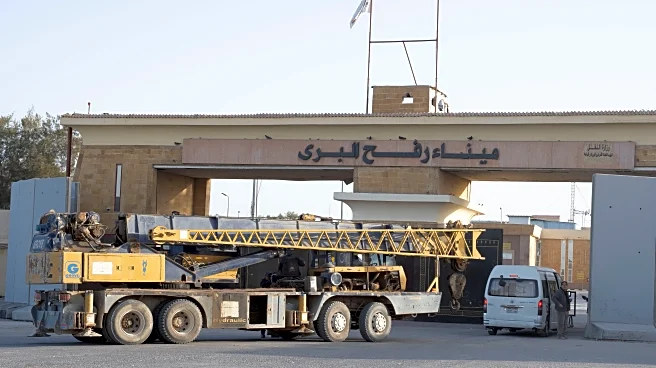
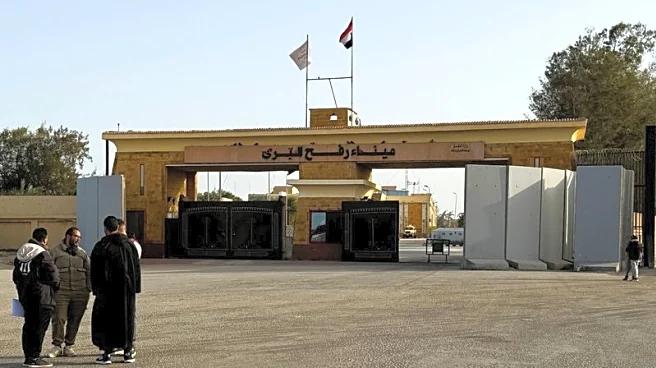
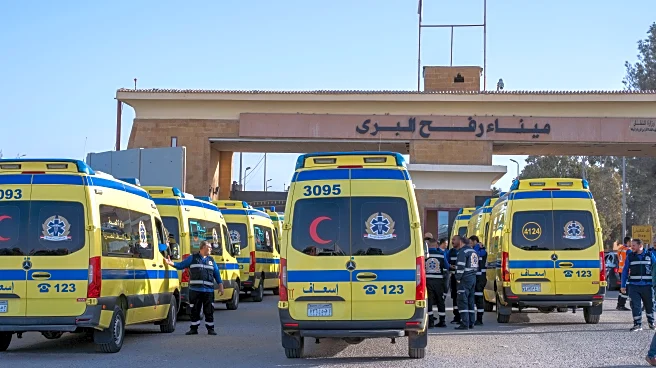
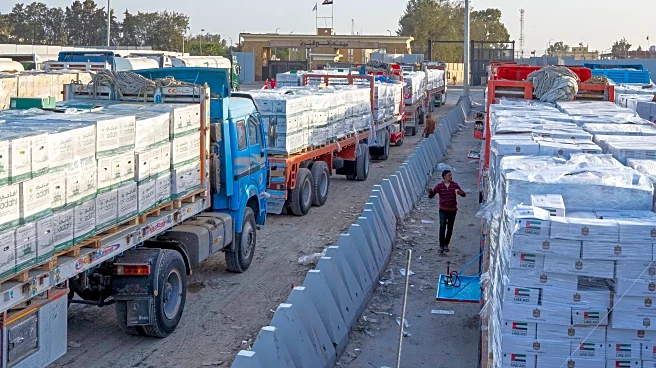
The Rafah border crossing between Gaza and Egypt has reopened, marking a key step in the Israel-Hamas ceasefire agreement. However, the reopening is largely symbolic as only a limited number of Palestinians are allowed to cross each day, and no goods
are permitted. The crossing is crucial for Palestinians needing medical care outside Gaza, with about 20,000 individuals hoping to leave the territory. The reopening follows a two-year conflict and is part of a broader ceasefire plan that includes exchanging hostages and increasing humanitarian aid. Despite the reopening, violence continues in Gaza, with reports of Israeli military actions resulting in casualties.
Why It's Important?
The reopening of the Rafah crossing is a significant development in the ongoing efforts to stabilize the region and provide humanitarian relief to Gaza's residents. It represents progress in the ceasefire agreement, which aims to end the prolonged conflict between Israel and Hamas. The limited access through Rafah highlights the challenges of implementing the ceasefire and the ongoing humanitarian needs in Gaza. The situation underscores the importance of international involvement in monitoring and supporting the peace process to ensure compliance and address the needs of the affected population.
What's Next?
As the ceasefire progresses, the number of people allowed to cross through Rafah is expected to increase, contingent on the success of the current operations. The international community, including the EU, will continue to monitor the situation closely to ensure compliance with the ceasefire terms. The ongoing military actions by Israel and the response from Hamas will be critical in determining the future stability of the region. Additionally, the humanitarian needs of Gaza's population will remain a priority, with international aid organizations likely to push for increased access to the territory.