






What's Happening?
Illinois has taken significant steps towards its decarbonization goals by initiating new battery storage and solar energy projects. The state's first battery power procurement auction, conducted by the Illinois Power Agency (IPA) following the Clean and Reliable
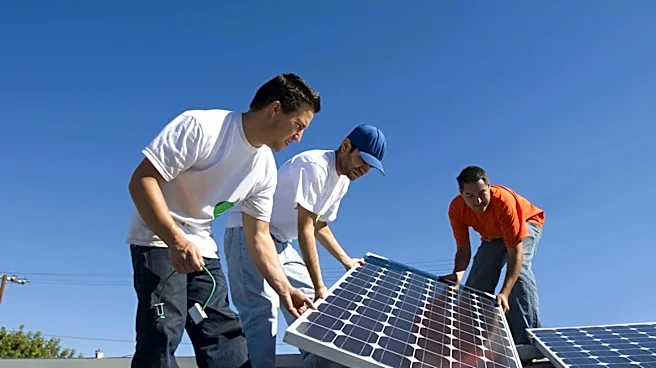
Grid Affordability Act (CRGA), secured 600 megawatts of new utility-scale energy storage projects slated to come online by 2030. This represents more than four times the current utility-scale battery storage in Illinois. While the procurement exceeded its goal for the Midcontinent Independent System Operator (MISO) territory in central and southern Illinois, securing 520 MW, it fell short in the PJM Interconnection territory in northern Illinois, securing only 80 MW against a target of 588 MW. Despite not meeting the overall initial target, renewable energy advocates view this as a substantial step forward. Additionally, residential solar projects are expanding, with companies like SOLRITE Energy entering the Illinois market, offering no-upfront-cost solar panels and home batteries through the state's 'virtual power plant' program.
Why It's Important?
This development is crucial for Illinois's ambitious decarbonization targets, as increased battery storage is essential for integrating intermittent solar and wind power into the grid. The 600 megawatts of new storage capacity will significantly enhance grid reliability and affordability, providing enough power for approximately half a million homes. The regional discrepancies in procurement highlight challenges in grid interconnection and project development, particularly in the PJM territory, which has historically faced delays in connecting new power generation. The success in the MISO territory, however, demonstrates the viability and interest in such projects. The expansion of residential solar and battery programs, facilitated by the 'virtual power plant' initiative, empowers consumers to contribute to the energy transition while potentially lowering their energy bills. This dual approach—utility-scale and residential—is vital for creating a resilient and decentralized energy system, reducing reliance on traditional fossil fuel plants, and fostering economic growth in the clean energy sector.
What's Next?
Illinois plans to conduct more procurements, with future rounds expected to offer greater flexibility and allow for projects that pair storage with solar or wind, which is identified as the fastest-emerging source of energy in the U.S. The IPA will seek stakeholder feedback this fall to refine the procurement process for 2027 and 2028. An integrated resource planning process, also established under CRGA, will commence with an initial plan submitted by regulatory agencies in November, allowing for an assessment of progress and determination of future procurement needs. Residential programs, such as SOLRITE Energy's goal to install thousands of solar-storage systems, are expected to expand, further decentralizing energy generation. These ongoing efforts aim to secure a minimum of 3,000 megawatts of energy storage by the end of 2030, indicating a sustained commitment to building a robust clean energy infrastructure in Illinois.
Beyond the Headlines
The Illinois initiative reflects a broader national trend towards integrating advanced energy storage solutions to support renewable energy expansion. The challenges faced in the PJM territory underscore the complex regulatory and infrastructural hurdles that can impede clean energy deployment, even with supportive legislation. Addressing these bottlenecks, such as interconnection queues and project development timelines, will be critical for accelerating the energy transition nationwide. The 'virtual power plant' concept, by aggregating distributed energy resources, represents a paradigm shift in grid management, moving towards a more dynamic and responsive system. This approach not only enhances grid stability but also democratizes energy production, allowing individual households and businesses to become active participants in the energy market. The long-term implications include reduced carbon emissions, enhanced energy independence, and the potential for significant economic benefits through job creation in the renewable energy sector and lower energy costs for consumers.