





What's Happening?
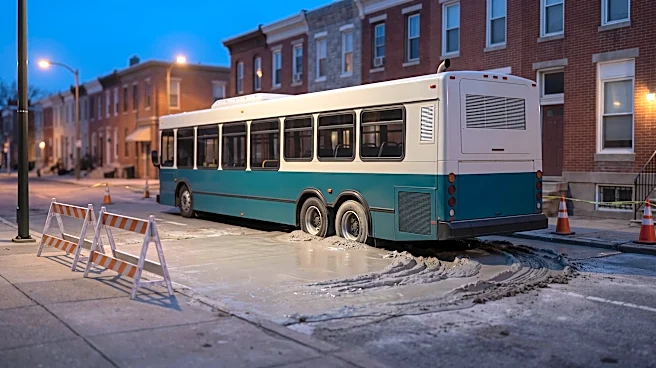
A significant water main break occurred in Des Moines' Highland Park neighborhood on Sunday, causing extensive damage to Eighth Street between Euclid and Clinton avenues. The incident resulted in broken pavement, exposed bricks, and a large hole in the
road, leading to the street's closure for repairs. Some residents in the affected area experienced a loss of water service due to the break. Des Moines Water Works has acknowledged an emergency outage in the specified section of Eighth Street, indicating that water is throttled down. However, as of the article's publication, the utility has not provided detailed information regarding the cause of the break, the exact number of affected customers, or a precise timeline for repairs. Residents reported waking up to find their water not working and observed the street cracking and flooding.
Why It's Important?
This water main break highlights critical infrastructure vulnerabilities within urban areas and the immediate impact such failures can have on daily life and local economies. For residents, the loss of water service disrupts essential household activities, while the street closure creates significant traffic disruptions, potentially affecting commutes and local businesses for several days. The responsibility for repairs falling on Des Moines Water Works underscores the ongoing need for robust maintenance and rapid response capabilities for public utilities. The lack of immediate detailed information from the utility can lead to uncertainty and frustration among affected residents, emphasizing the importance of transparent communication during emergencies. Such incidents can also lead to unexpected costs for municipalities and utility providers for emergency repairs and potential long-term infrastructure upgrades.
What's Next?
Des Moines Water Works is responsible for repairing both the water main and the damaged section of Eighth Street. The utility typically states that emergency outages last between four to six hours, though repair times can vary. Residents are advised to avoid the damaged street section, adhere to barricades and traffic directions, and refrain from driving through standing water or approaching the large hole. After water service is restored, the utility recommends slowly running a faucet without an aerator for a minute or two to clear any cloudy water caused by air in the lines. Residents experiencing continued cloudy or discolored water, or persistent low pressure, are encouraged to contact Water Works dispatch for assistance. Updates on the outage and repair progress are expected to be provided on the utility’s current outage page.
Beyond the Headlines
Beyond the immediate inconvenience, this incident underscores broader issues related to aging infrastructure in many U.S. cities. Water main breaks are often symptoms of older pipe systems that are susceptible to environmental factors, ground shifts, and material degradation. The frequency of such events can indicate a need for significant investment in infrastructure modernization and preventative maintenance programs. While Des Moines Water Works is addressing this specific break, the long-term implications point to the necessity for proactive strategies to prevent future occurrences, which could involve comprehensive system assessments, material upgrades, and increased funding for infrastructure projects. The incident also serves as a reminder of the interconnectedness of urban systems, where a single point of failure can cascade into multiple disruptions affecting public services, transportation, and community well-being.