




What's Happening?
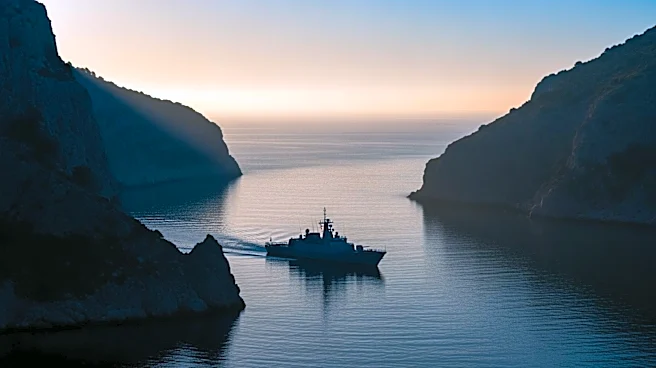
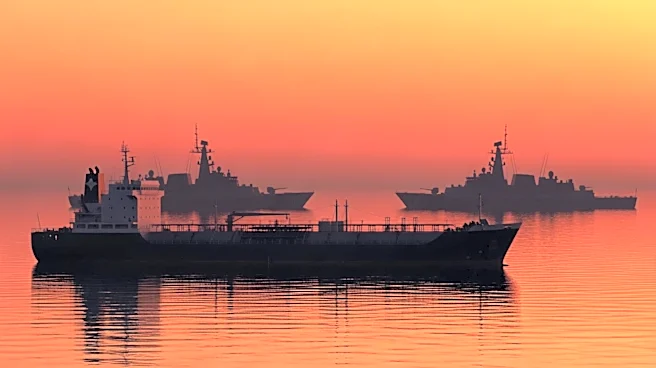
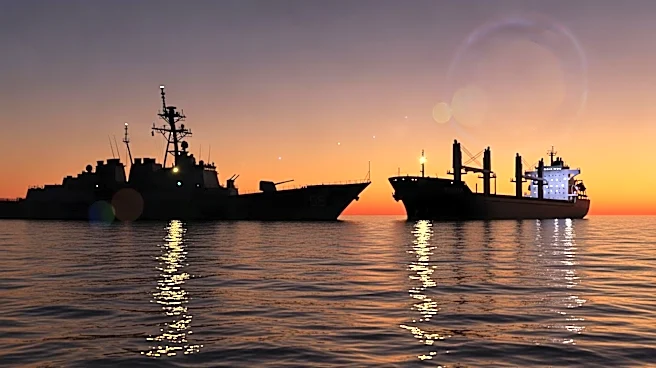
Iranian gunboats fired at tankers in the Strait of Hormuz early Saturday, according to the British military. This action follows Iran's announcement to impose 'strict control' over the waterway in response to a U.S. blockade of Iranian ports. The United
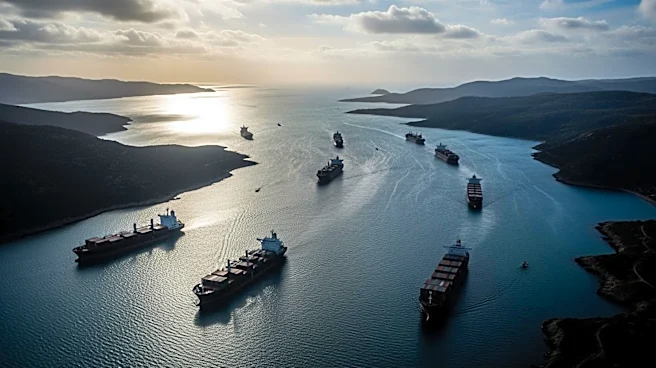
Kingdom Maritime Trade Operations Centre reported that a tanker was approached and fired upon by gunboats operated by Iran's Islamic Revolutionary Guards Corps. Fortunately, the crew and ship were reported safe. Additionally, a container ship was struck by an unknown projectile, causing damage to some containers. This incident highlights the escalating tensions in the region, which is a critical chokepoint for global oil shipments.
Why It's Important?
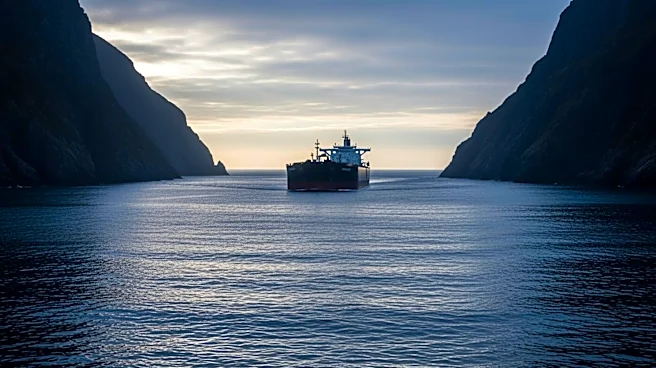
The Strait of Hormuz is a vital waterway for global oil transportation, with a significant portion of the world's oil passing through it. Any disruption in this area can have substantial implications for global oil prices and supply chains. The firing on tankers by Iranian forces underscores the heightened tensions between Iran and the U.S., potentially affecting international trade and energy markets. The safety of maritime operations in this region is crucial for maintaining stable oil prices and ensuring the uninterrupted flow of energy resources. This development could lead to increased military presence and heightened security measures by countries reliant on oil shipments through the strait.
What's Next?
The international community, particularly countries dependent on oil shipments through the Strait of Hormuz, will likely monitor the situation closely. There may be calls for diplomatic interventions to de-escalate tensions and ensure the safety of maritime operations. The U.S. and its allies might consider reinforcing naval patrols in the region to protect commercial vessels. Additionally, further incidents could prompt discussions at international forums about the security of global shipping lanes and the need for collective measures to prevent similar occurrences in the future.