




What's Happening?
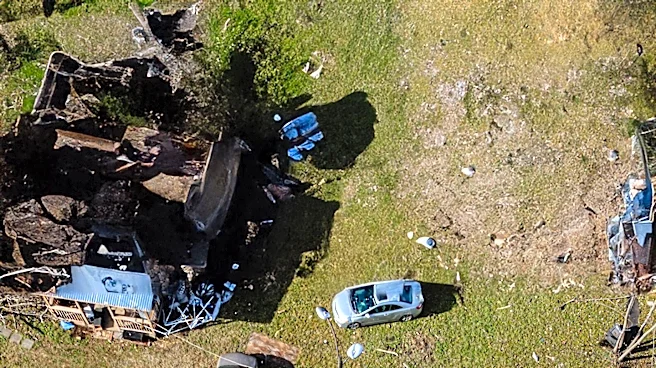
U.S. Representative Eli Crane (R-District 2) visited Camp Verde on Friday, November 13, to assess the damage caused by recent historic rains and flooding along Oak Creek in Arizona. This visit followed a work session by the Sedona City Council on Thursday,
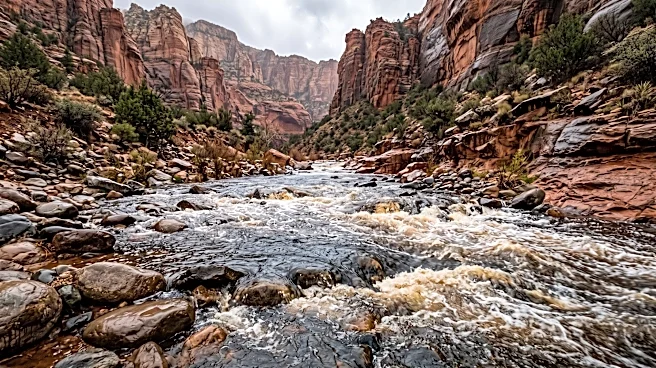
November 12, where officials reviewed the city's emergency response and ongoing recovery efforts. The flooding, which occurred on November 1, damaged approximately 88 structures within Sedona city limits and necessitated 28 air rescues, with 45 residents being airlifted to safety. The National Weather Service described the event as 'unprecedented' for being a 'strictly a rain of full saturation' flood, unlike typical 'rain-on-snow events' in the region. The flood ranked as the second-highest since 1983, reaching 22,600 cubic feet per second.
Why It's Important?
Representative Crane's tour highlights the federal government's engagement in local disaster relief and recovery efforts. His presence signifies an acknowledgment of the severe impact of the flooding on Arizona communities and could potentially lead to federal assistance or resources for the affected areas. The unprecedented nature of the rainfall and subsequent flooding also underscores the growing challenges posed by extreme weather events, which may necessitate a reevaluation of existing emergency response protocols and infrastructure. The damage to numerous structures and the need for air rescues demonstrate the vulnerability of communities to such natural disasters, emphasizing the importance of robust emergency management and long-term flood mitigation strategies. The event also brings to light the personal toll on residents, with some reporting near-fatal experiences and difficulties in receiving timely evacuation warnings.
What's Next?
Sedona city officials are considering revising their emergency action playbook based on the lessons learned from this event, including potentially setting up emergency operations centers sooner. Flood control and mitigation projects are expected to be on the agenda for the council's December priority retreat for 2027, with discussions about establishing placeholder funds in the 10-year Capital Improvement Plan for future flood control measures. A formal after-action report detailing the city's response and areas for improvement is anticipated within six to eight months. Additionally, the Airbnb Foundation has committed 500 room nights for temporary housing, administered by the Greater Sedona Chamber of Commerce, to assist those displaced by the flood. Community-led fundraising efforts are also underway to support recovery.
Beyond the Headlines
The historic flooding in Arizona raises broader questions about climate change and its localized impacts, even if climate change is typically measured over longer increments. The shift from 'rain-on-snow events' to 'strictly rain of full saturation' floods suggests a potential change in weather patterns that communities need to adapt to. This event could serve as a case study for other regions facing similar environmental shifts, prompting a reevaluation of urban planning, infrastructure development, and emergency preparedness in the face of evolving climate conditions. The discussions around waiving development impact fees for homeowners affected by the flood also highlight the financial burdens placed on individuals during disasters and the role of local government in alleviating such pressures.