






What's Happening?
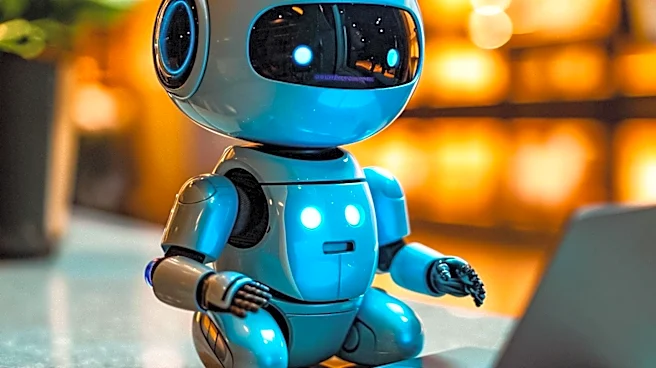
Children are forming deep emotional bonds with AI companion robots, such as Moxie, a 15-inch robot designed to help neurodivergent children with social skills. However, a modern problem is emerging as the companies behind these robots go out of business,
causing the robots to cease functioning. This leaves children facing a 'death' of their AI playmate, a situation described as a 'complicated goodbye' by experts. The issue came to light with Moxie, which helped a 10-year-old practice calming techniques and conversation. Its maker, Embodied, ran out of money, leading to the robot's shutdown. Although Moxie was briefly resurrected by a second investor, that company also folded, leaving parents to explain the robot's permanent cessation to their children. This problem is not unique to Moxie, highlighting a significant ethical question for robots specifically designed to be lovable and marketed to children.
Why It's Important?
This development is important because it exposes a critical ethical and psychological challenge in the rapidly evolving field of artificial intelligence and robotics, particularly concerning children. The formation of deep emotional attachments between children and AI companions, while potentially beneficial for social development, creates vulnerability when these devices become inoperable due to business failures. The 'death' of an AI playmate can be a traumatic experience for a child, akin to losing a pet or a close friend, but without the traditional societal frameworks for grieving or understanding. This situation forces parents and caregivers to navigate complex emotional conversations, as exemplified by the parents who struggled to explain Moxie's shutdown to their son. It also raises questions about the responsibility of companies developing such emotionally engaging products and the need for safeguards or protocols to manage the end-of-life of these AI companions, especially when marketed to vulnerable populations like neurodivergent children.
What's Next?
As AI companion robots become more prevalent, there will likely be increased scrutiny and demand for ethical guidelines and industry standards regarding their longevity and the emotional impact of their discontinuation. Experts have only begun to grapple with how to help children cope with these 'complicated goodbyes.' This could lead to the development of new support mechanisms for families, such as counseling services or educational resources, to address the emotional fallout when AI companions cease to function. Furthermore, the issue may prompt discussions among developers, investors, and policymakers about the sustainability of business models for AI companion companies and the potential for long-term support or open-source solutions to prevent abrupt shutdowns. There might also be a push for greater transparency from companies about the potential for their products to become obsolete, allowing parents to make more informed decisions about introducing these technologies into their children's lives.
Beyond the Headlines
The phenomenon of children grieving their AI playmates delves into profound philosophical and psychological questions about the nature of companionship, attachment, and loss in an increasingly technological world. It challenges traditional understandings of relationships, as children form bonds with non-biological entities that can evoke genuine emotional responses. This situation highlights the blurring lines between human-human and human-AI interactions and the potential for technology to reshape our emotional landscapes. Ethically, it compels a re-evaluation of how we design and deploy AI, particularly when it interacts with vulnerable populations. The long-term societal implications could include changes in how children develop empathy, cope with loss, and understand the permanence of relationships. It also underscores the need for a societal dialogue about the responsibilities that come with creating artificial entities capable of eliciting deep emotional connections, and how to mitigate the psychological risks associated with their inevitable obsolescence or failure.