





What's Happening?
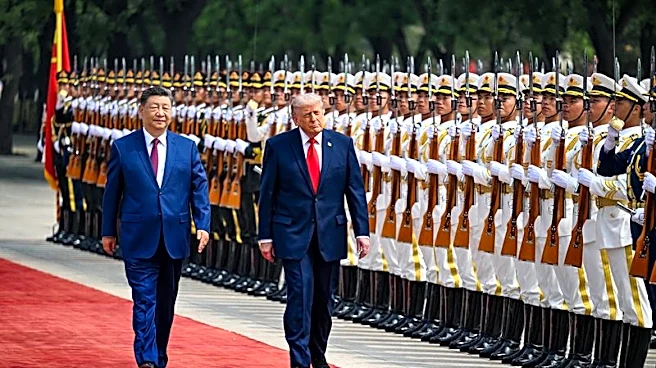
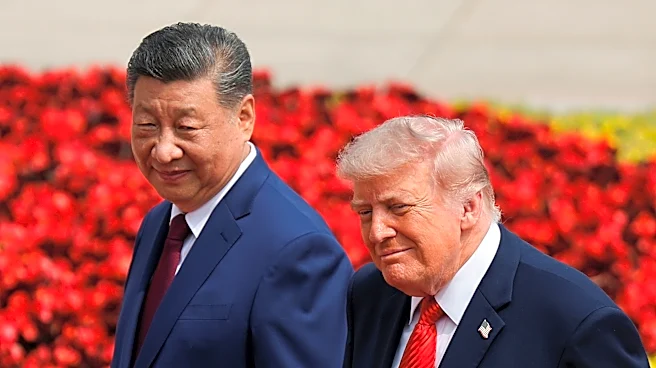
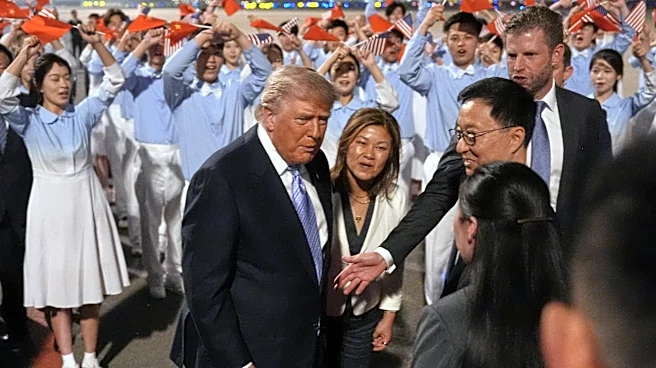
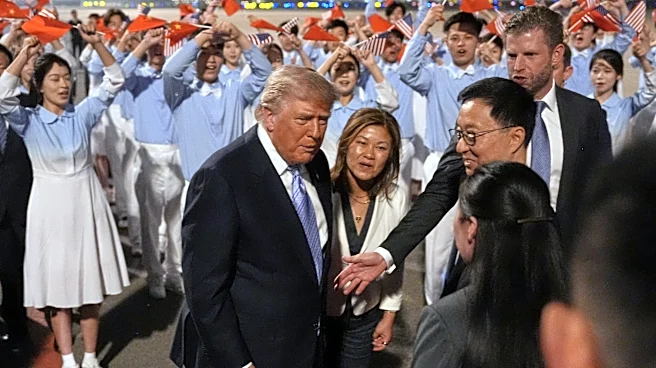
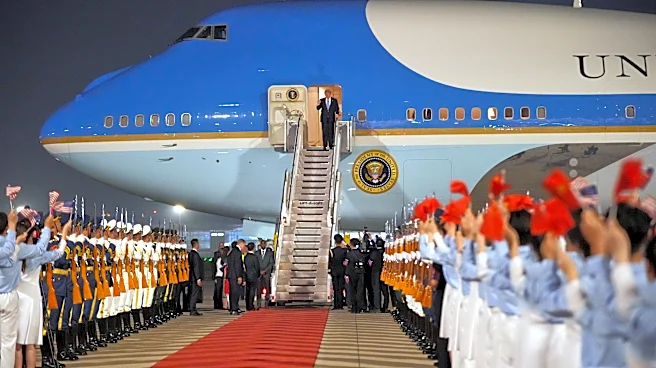
President Donald Trump and Chinese President Xi Jinping have called for the reopening of the Strait of Hormuz following discussions aimed at resolving the ongoing conflict involving Iran. The talks, which took place during Trump's visit to Beijing, highlighted
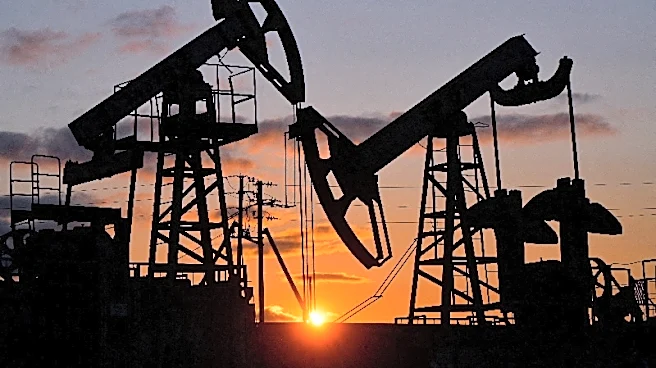
a rare moment of cooperation between the U.S. and China, the world's two largest economies. The closure of the Strait of Hormuz has significantly disrupted global oil and LNG flows, contributing to a rise in oil prices. Despite the diplomatic efforts, negotiations remain deadlocked, and there is little indication of immediate progress toward reopening the strategic waterway. The conflict has led to increased volatility in oil markets, with Brent crude prices rising significantly since the onset of the conflict.
Why It's Important?
The closure of the Strait of Hormuz, a critical chokepoint for global oil and LNG trade, has far-reaching implications for the global economy. The strait handles approximately one-fifth of the world's oil trade, and its closure has exacerbated supply disruptions, leading to increased oil prices. This situation affects not only energy markets but also geopolitical relationships, as countries navigate the complexities of the conflict. The U.S. and China's involvement underscores the strategic importance of the strait and the need for international cooperation to stabilize the region. The ongoing conflict and its impact on energy flows highlight the vulnerability of global supply chains to geopolitical tensions.
What's Next?
While President Trump and Xi Jinping have expressed a desire to reopen the Strait of Hormuz, the path forward remains uncertain. The U.S. continues to maintain a naval blockade targeting Iranian ports, and Iran has resisted demands to fully reopen shipping access. The situation is likely to remain tense, with potential for further escalation if diplomatic efforts do not yield results. The international community will be closely monitoring developments, as any resolution could have significant implications for global energy markets and geopolitical stability. Stakeholders, including energy companies and governments, will need to adapt to the evolving situation and prepare for potential disruptions.