





What's Happening?
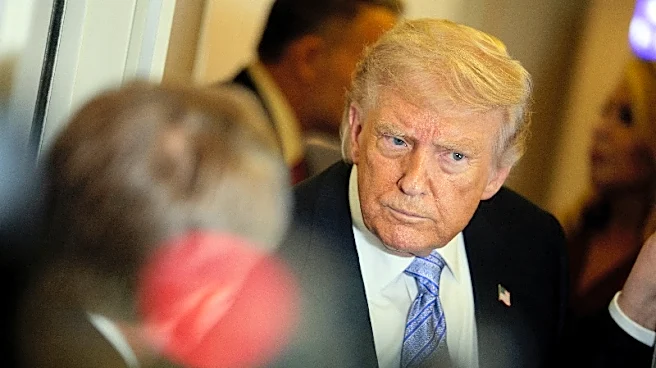
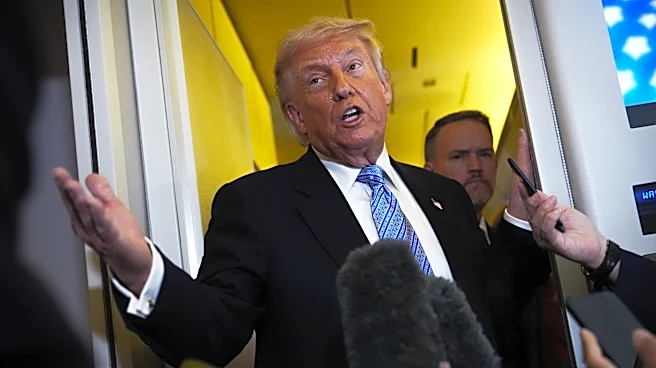
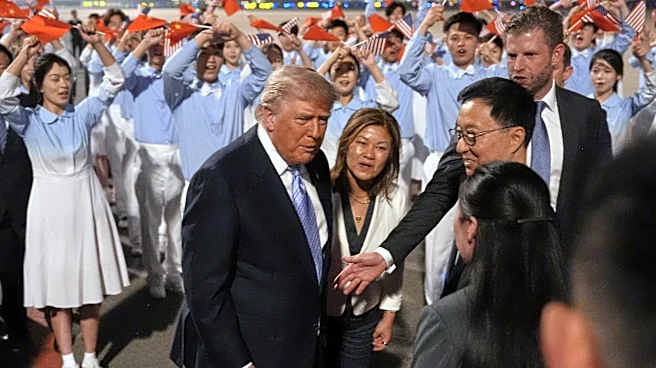
President Trump recently visited China, engaging in discussions with Chinese leader Xi Jinping. The visit was marked by a display of diplomatic pageantry, including a military gun salute and a tour of the Communist Party leadership compound. The discussions focused
on the US-China relationship, which Trump described as one of the 'most consequential' in world history. A significant topic was Taiwan, with Xi emphasizing that mishandling this issue could jeopardize the US-China relationship. Trump acknowledged these concerns and mentioned that he would soon make a determination regarding US arms sales to Taiwan, a matter discussed in detail during the visit.
Why It's Important?
The visit underscores the delicate balance in US-China relations, particularly concerning Taiwan. China's view of Taiwan as a critical 'red line' issue highlights the geopolitical tensions that could impact global stability. The discussions between Trump and Xi suggest a potential shift towards 'constructive strategic stability,' which could influence trade and technological exchanges. The outcome of these talks may affect US policy decisions, including arms sales to Taiwan, which have been a point of contention. A stable relationship could benefit both nations economically, but any missteps could lead to broader conflicts.
What's Next?
President Trump is expected to make a decision on the arms sales to Taiwan soon, which could significantly impact US-China relations. The potential pause on the $14 billion arms deal, approved by Congress, would be a notable win for China. Additionally, Xi has accepted Trump's invitation to visit the US in the fall, providing another opportunity for diplomatic engagement. The future of US-China relations will likely hinge on how these issues are managed, particularly regarding Taiwan and trade policies.
Beyond the Headlines
The visit highlights the broader implications of US-China relations, including the strategic positioning of both nations on the global stage. China's ability to project itself as an equal to the US could influence international perceptions and alliances. The emphasis on 'strategic stability' may redefine how both countries approach trade and technology disputes, potentially affecting global supply chains. The handling of Taiwan remains a critical factor, with implications for regional security and US foreign policy.