





What's Happening?
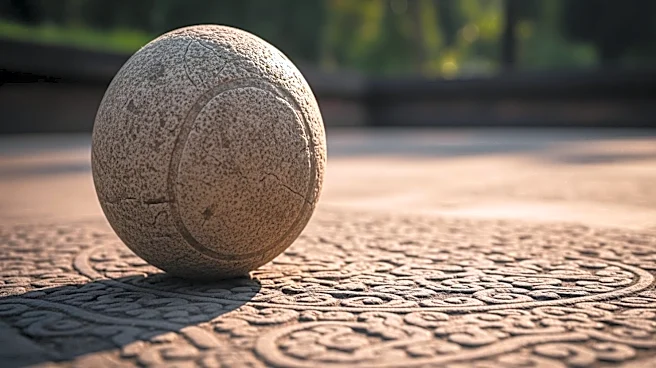
In Mexico, the ancient ballgame known as ulama is experiencing a revival as the country prepares to co-host the 2026 FIFA World Cup. Ulama, a traditional Mesoamerican sport dating back 3,400 years, was nearly eradicated during the Spanish conquest but
survived in remote areas of northwestern Mexico. The game is played with a heavy rubber ball, using only the hips to keep it in motion. The Osuna family, particularly Maria Herrera and her grandchildren, are key figures in preserving this cultural heritage in Sinaloa. The game, once a significant social event, is now being promoted alongside international soccer to highlight Mexican heritage. However, there are concerns that its portrayal as an 'exotic' attraction might undermine its cultural significance.
Why It's Important?
The revival of ulama is significant as it represents a cultural renaissance and a reclaiming of indigenous heritage in Mexico. As the country gears up for the FIFA World Cup, showcasing ulama offers a unique opportunity to educate both locals and international visitors about Mexico's rich pre-Hispanic history. This revival also highlights the broader trend of cultural preservation amid globalization. For the Osuna family and others involved, ulama is more than a sport; it is a means of cultural expression and identity. The game’s resurgence could foster national pride and contribute to cultural tourism, potentially benefiting local economies.
What's Next?
As ulama gains attention, there are plans to feature the sport in exhibitions and advertising campaigns in major cities like Mexico City and Guadalajara. This increased visibility could lead to more institutional support and integration into educational programs, ensuring the sport's survival. However, stakeholders must balance commercial interests with cultural integrity to avoid reducing ulama to mere spectacle. The involvement of young players, like those from the Osuna family, is crucial for the sport's future, as they represent the next generation of cultural custodians.
Beyond the Headlines
The revival of ulama raises questions about cultural appropriation and commercialization. While increased visibility can aid preservation, it also risks commodifying a deeply spiritual and historical practice. The challenge lies in promoting ulama in a way that respects its origins and significance. Additionally, the sport's revival could inspire similar efforts to preserve other indigenous traditions, contributing to a broader movement of cultural resilience and diversity in Mexico.