





What's Happening?
The United Nations World Food Programme (WFP) has strongly condemned an airstrike that targeted two of its trucks on Sunday outside Dilling, South Kordofan State, southern Sudan. The trucks were transporting food aid to Kadugli when they came under air attack.
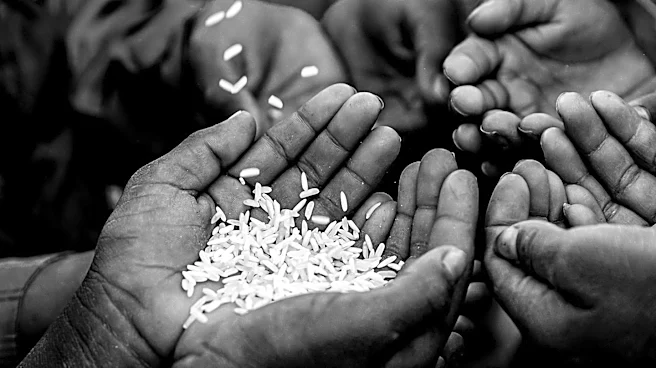
The WFP reported that the attack destroyed over 50 metric tonnes of food, which was enough to provide life-saving assistance to 5,800 people for one month. The agency emphasized that the trucks were clearly marked with WFP banners and flags, making the attack a direct violation of humanitarian principles. This incident is the latest in a series of challenges faced by humanitarian agencies in Sudan, with the WFP having recorded eight aerial attacks that damaged its premises and disrupted operations since the beginning of the year. The WFP urged all parties involved in the conflict to respect international humanitarian law, protect civilians, and ensure the safety of humanitarian personnel and assets, stressing that attacks on aid workers are unacceptable.
Why It's Important?
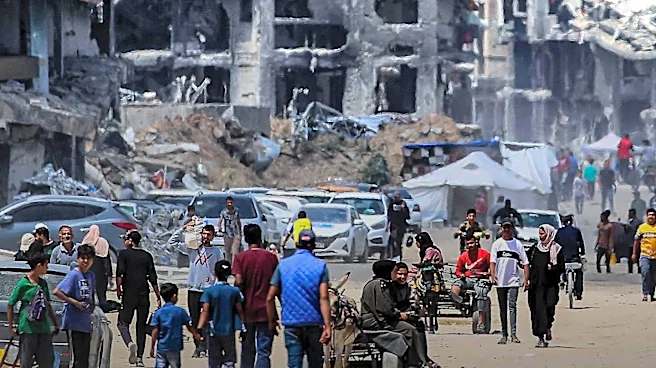
This airstrike on WFP aid trucks in Sudan has significant implications for humanitarian efforts and international law. The destruction of vital food supplies directly exacerbates the already critical humanitarian crisis in Sudan, where millions are displaced and facing severe food insecurity. For the U.S., which is a major donor to humanitarian aid globally, such attacks undermine the effectiveness of its foreign assistance and complicate efforts to alleviate suffering. The targeting of clearly marked humanitarian vehicles is a grave violation of international humanitarian law, potentially constituting a war crime. This incident highlights the extreme dangers faced by aid workers and the challenges of delivering assistance in conflict zones. It also puts pressure on the U.S. and its allies to condemn such actions and push for accountability, as the disregard for humanitarian principles can set a dangerous precedent for other conflicts. The ongoing conflict in Sudan, fueled by external support, continues to destabilize the region, impacting U.S. strategic interests in promoting peace and security in Africa.
What's Next?
The WFP has called for an immediate, independent investigation into the attack and previous incidents targeting humanitarian assistance, demanding that those responsible be held accountable. The Emergency Lawyers, a volunteer rights group, echoed this call, warning that restrictions on humanitarian access and attempts to block aid deliveries are worsening the crisis, compounded by declining agricultural production and reduced rainfall. They urged conflict parties to remove restrictions on civilian access to food and aid, ensuring assistance reaches those in need without discrimination. The U.S. and other international bodies are likely to increase diplomatic pressure on the warring factions in Sudan to adhere to international humanitarian law and facilitate safe passage for aid. There may also be renewed calls for expanded sanctions or other measures against parties found responsible for targeting humanitarian operations. The incident underscores the urgent need for a political resolution to the conflict to prevent further civilian suffering and ensure the safe delivery of aid.
Beyond the Headlines
The repeated targeting of humanitarian aid in Sudan, despite clear markings, points to a disturbing trend of deliberate disregard for international norms and the sanctity of civilian life in conflict zones. This goes beyond mere collateral damage, suggesting a potential strategy to weaponize hunger and displacement, which has profound ethical and legal ramifications. The psychological impact on the affected populations, who see their last hope for survival destroyed, is immense, fostering deeper distrust and despair. For the international community, including the U.S., this raises fundamental questions about the efficacy of current protection mechanisms for humanitarian operations and whether stronger enforcement measures are needed. It also highlights the complex interplay between conflict, climate change (declining agricultural production, reduced rainfall), and humanitarian crises, creating a multi-layered challenge that requires integrated solutions. The long-term consequence of such actions is the erosion of humanitarian space, making it increasingly difficult for aid organizations to operate and ultimately prolonging human suffering in conflict-affected regions.