








What's Happening?
The United States military possesses a significant and often overlooked advantage in its fleet of over 600 air refueling aircraft. This number far surpasses that of any other nation, collectively exceeding the total number of refueling aircraft operated
by all other countries combined. According to GlobalFirePower.com's 2026 data, the U.S. operates 610 refueling aircraft, while the next closest country, Saudi Arabia, has 22. Russia operates 18, France 15, and Israel 11, with China possessing only nine. This extensive fleet allows U.S. tactical aircraft to achieve global reach and sustain operations for extended periods, overcoming the inherent limitations of aircraft fuel capacity.
Why It's Important?
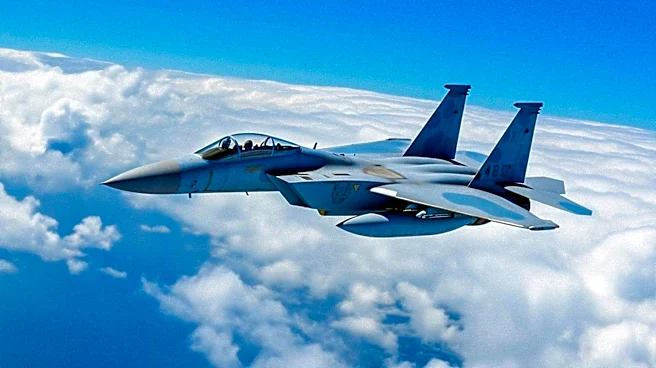
This overwhelming advantage in air refueling capability is crucial for U.S. national security and global power projection. It enables the U.S. Air Force to deploy and sustain air assets anywhere in the world, providing unparalleled operational flexibility and strategic reach. For tactical aircraft like fighter jets, which consume fuel rapidly, in-flight refueling significantly extends their combat endurance, allowing them to remain on station longer and engage targets more effectively. Furthermore, tankers enable tactical jets to operate from shorter or more austere airstrips by allowing them to take off with less fuel, making them lighter and requiring less runway. This capability is a cornerstone of U.S. military strategy, ensuring that its air power can be brought to bear in any theater of operations, regardless of distance or logistical challenges.
What's Next?
The U.S. military is continuously working to modernize and expand its air refueling capabilities. The U.S. Navy is actively developing and fielding the MQ-25 Stingray, a carrier-capable refueling drone, with an expected service entry in 2026. This will further enhance the Navy's ability to extend the range and endurance of its carrier-based aircraft. Ongoing efforts will likely focus on integrating new technologies, improving efficiency, and ensuring the continued readiness of the existing diverse fleet of refueling aircraft, which includes various iterations of the C-130 Hercules, KC-10, KC-135, and KC-46, as well as adaptations like the F/A-18E/F for refueling duties. The sustained investment in this critical asset underscores its importance to future military operations and maintaining a decisive edge.
Beyond the Headlines
The U.S.'s dominant air refueling capacity has profound geopolitical implications. It allows the U.S. to maintain a robust forward presence and respond to crises globally without relying heavily on foreign basing rights for extended periods. This strategic independence enhances diplomatic leverage and deterrence capabilities. The sheer scale of this advantage also creates a significant barrier to entry for potential adversaries seeking to challenge U.S. air superiority, as developing a comparable refueling fleet would require immense resources and decades of effort. This capability is not just about extending flight times; it's about projecting power, influencing international events, and ensuring the effectiveness of U.S. military operations across vast distances, shaping the global security landscape.