




What's Happening?
Computer chips, particularly those utilizing Complementary Metal-Oxide-Semiconductor (CMOS) technology, are highly susceptible to damage from radiation in space. Professor Li Chen from the University of Saskatchewan explains that as radioactive particles
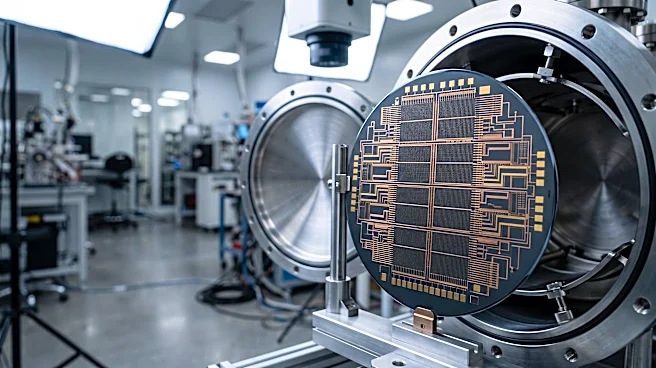
pass through a chip, they leave behind electrical charges that can interfere with transistors, leading to unintended switch activations. This interference can instantly alter stored data, corrupt calculations, interrupt programs, or cause sudden power surges. Over time, radiation can also cause gradual damage, making chips slower, more power-intensive, or completely inoperable. Given that spacecraft can be millions of miles from Earth, even a minor electronic error can have severe consequences. Li's research group focuses on understanding these effects and developing radiation-hardened electronics. They recreate space-like environments in laboratories to test chips under radiation exposure, identifying sensitive areas and designing more resilient circuits. This involves clever arrangements and connections of transistors, such as separating or duplicating sensitive components and using self-checking circuits to detect and correct errors immediately, rather than relying on exotic materials or thick shielding.
Why It's Important?
The vulnerability of computer chips to space radiation has critical implications for U.S. space exploration, satellite technology, and national security. Satellites, which are integral to modern communication, navigation (including GPS), weather forecasting, and defense systems, rely heavily on these chips. A single radiation-induced error can compromise a satellite's functionality, leading to significant operational failures. This necessitates substantial investment in research and development for radiation-hardened electronics to ensure the reliability and longevity of U.S. space assets. The ability to protect these components directly impacts the effectiveness of military and intelligence operations, as well as the stability of critical infrastructure that depends on satellite services. Furthermore, the development of robust space-grade semiconductors can foster innovation within the U.S. technology sector, creating new opportunities for companies specializing in advanced materials and circuit design, and reducing reliance on foreign suppliers for critical space components.
What's Next?
The STARR-Lab, led by Professor Li Chen, is actively developing the StarRISC program, a microcontroller designed to be highly resistant to radiation. The initial goal is to make this processor reliable, with subsequent efforts focused on increasing its computing power. Modern spacecraft require significant processing capabilities to handle large amounts of information autonomously, including tasks involving artificial intelligence for identifying wildfires, autonomous navigation, and making decisions when communication with Earth is delayed. The second generation of StarRISC is currently under development, aiming to support the future of space exploration by providing more powerful, radiation-resistant computing solutions. This ongoing research and development will likely lead to more resilient and intelligent spacecraft, enhancing the capabilities of future U.S. space missions and satellite networks. Continued collaboration between academic institutions, government agencies, and private industry will be crucial in advancing these technologies and ensuring their successful deployment.
Beyond the Headlines
The challenge of radiation hardening for computer chips in space extends beyond immediate operational concerns, touching upon broader ethical and economic considerations. The increasing reliance on space-based assets for everyday life, from GPS navigation to financial transactions, means that vulnerabilities in these systems could have widespread societal impacts. The development of radiation-hardened technology also raises questions about the accessibility and cost of space exploration, as specialized components can be expensive. Moreover, the research into making electronics more resilient in extreme environments could have spillover benefits for terrestrial applications, particularly in critical infrastructure that requires high reliability and resistance to environmental stressors. The emphasis on designing resilient circuits rather than relying on heavy shielding also highlights a shift towards more efficient and sustainable engineering practices in space, reducing launch costs and environmental impact. This ongoing effort underscores the critical interplay between fundamental scientific research, advanced engineering, and national strategic interests in the rapidly evolving domain of space.