





What's Happening?
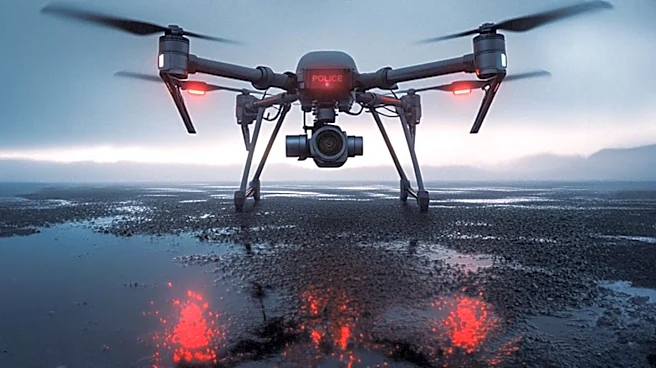
The San Bernardino Police Department has integrated drone technology into its real-time information center, leading to faster response times and improved situational awareness for officers. According to Captain Nelson Carrington, the drones have responded
to over 500 calls in approximately two months. These unmanned aircraft are operated by trained personnel at police headquarters who maintain communication with dispatchers and responding officers. The drones are often the first to arrive at a scene, providing critical real-time information before ground units reach the location. This technology has allowed drones to arrive at scenes over 70% faster than officers and has cleared 17% of calls without the need for officer response. Officer Nathaniel Kolonics highlighted the drones' role in apprehending suspects and enhancing officer safety.
Why It's Important?
The deployment of drones by the San Bernardino Police Department signifies a significant shift in law enforcement tactics, prioritizing technology to improve operational efficiency and officer safety. By providing immediate aerial views and thermal imaging capabilities, drones can identify threats, locate suspects, and gather crucial evidence more rapidly than traditional methods. This not only reduces response times but also minimizes the risks faced by officers in potentially dangerous situations. The ability to clear 17% of calls without officer presence suggests a potential for optimized resource allocation, allowing human officers to focus on more complex or high-priority incidents. This technological adoption could serve as a model for other police departments seeking to modernize their operations and enhance community safety.
What's Next?
The San Bernardino Police Department plans to continue expanding its drone program, viewing it as part of a broader initiative to leverage technology and data for improved community service. The department anticipates further enhancements in efficiency and effectiveness as the program matures. Other law enforcement agencies across the U.S. may observe San Bernardino's success and consider implementing similar drone programs, potentially leading to a wider adoption of this technology in policing. Future developments could include more advanced drone capabilities, such as enhanced AI for object recognition or improved communication systems for seamless integration with ground operations. The ongoing evaluation of the program's impact on crime rates and public perception will be crucial for its long-term success and broader acceptance.
Beyond the Headlines
The increasing use of drone technology in law enforcement raises important discussions about privacy, surveillance, and civil liberties. While proponents emphasize enhanced safety and efficiency, critics often voice concerns about potential overreach and the erosion of privacy rights. The deployment of drones equipped with thermal imaging and advanced surveillance capabilities necessitates clear policies and regulations to ensure responsible use and prevent misuse. Striking a balance between public safety and individual freedoms will be a continuous challenge as this technology becomes more prevalent. Furthermore, the ethical implications of using drones for policing, including data retention, accountability for errors, and the potential for bias in algorithmic decision-making, will require ongoing public discourse and legislative attention.