
What's Happening?
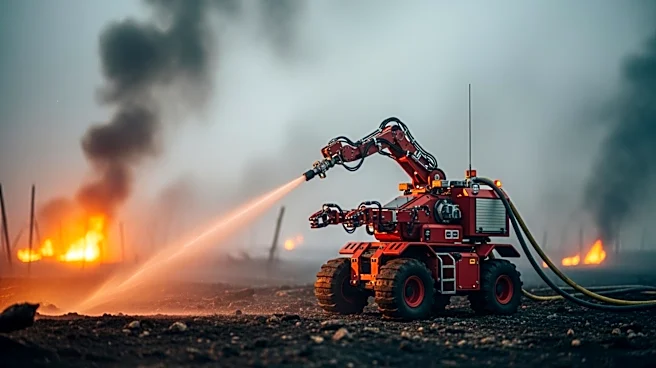
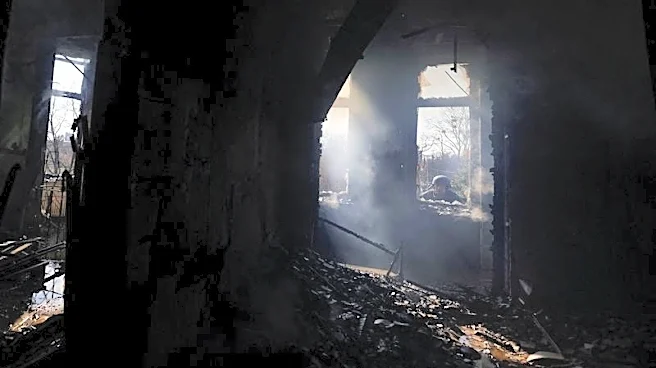
Ukrainian soldiers have employed a firefighting robot for the first time to extinguish a fire in a residential area following a Russian attack. The incident occurred in Kramatorsk, Donetsk Oblast, where the 12th Special Purpose Brigade 'Azov' deployed
a Zmiy unmanned ground vehicle (UGV) to manage the blaze without risking soldiers' lives. The robot successfully doused the fire, preventing its spread, while soldiers maintained a safe distance. The Zmiy UGV, produced by RoverTech, is equipped with a remote firefighting module and can operate from up to 3,000 meters away, towing up to 700 kilograms of cargo. This technology is part of Ukraine's growing defense tech industry, which is increasingly focusing on civilian applications to support emergency services in hazardous situations.
Why It's Important?
The deployment of the Zmiy firefighting robot represents a significant advancement in Ukraine's defense technology, highlighting the country's innovative approach to mitigating risks in conflict zones. By utilizing such technology, Ukraine can protect its soldiers while effectively responding to emergencies caused by ongoing Russian strikes. This development underscores the potential for defense tech to transition into civilian applications, offering solutions for emergency services in dangerous environments. As Ukraine continues to face relentless attacks, the integration of advanced technology into its defense and emergency response strategies is crucial for safeguarding lives and infrastructure.
What's Next?
As Ukraine's defense tech sector continues to evolve, there is potential for further integration of robotic technology into civilian emergency services. The success of the Zmiy UGV in firefighting operations may encourage additional investment and development in similar technologies, enhancing Ukraine's ability to respond to crises. The country's focus on defense tech as a pillar of economic recovery could lead to increased foreign investment and collaboration, further strengthening its technological capabilities. Additionally, the ongoing conflict may drive innovation in other areas of defense and emergency response, as Ukraine seeks to protect its citizens and infrastructure from continued threats.
Beyond the Headlines
The use of firefighting robots in conflict zones raises important ethical and legal considerations regarding the deployment of autonomous technology in warfare and civilian protection. As these technologies become more prevalent, questions about their regulation, accountability, and impact on human roles in emergency response will need to be addressed. Furthermore, the integration of defense tech into civilian applications may influence global standards and practices, potentially leading to broader adoption of similar technologies in other countries facing conflict or natural disasters.