






What's Happening?
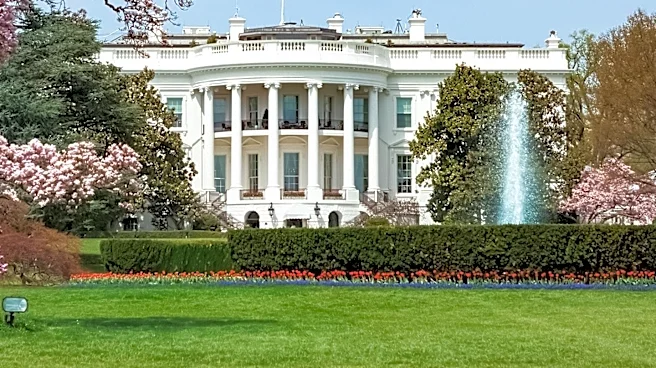
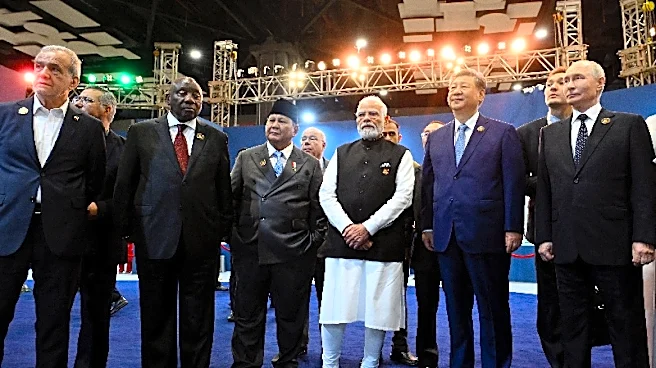
President Trump is set to host Chinese President Xi Jinping for a state visit at the White House on September 24, marking their second summit this year. The meeting comes amidst ongoing scrutiny of President Trump's diplomatic approach, particularly his emphasis
on personal rapport with foreign leaders. Experts suggest that President Trump's belief in his unique ability to forge personal connections with leaders like Xi Jinping may be a miscalculation, as Xi is characterized as a leader who prioritizes long-term strategic goals over personal relationships. This perspective is informed by Xi's history of patiently executing his agenda and his unsentimental approach to even close associates. The upcoming summit follows previous encounters where President Trump's attempts to leverage personal charisma did not yield significant strategic concessions from China, leading to concerns about the effectiveness of his diplomatic strategy.
Why It's Important?
The differing diplomatic styles between President Trump and Xi Jinping are crucial because they directly impact the effectiveness of U.S.-China relations and global stability. President Trump's focus on personal rapport, while a common American political trait, may be ill-suited for engaging a leader like Xi Jinping, who operates within a system that rewards strategic patience and ruthlessness. This mismatch in approaches could lead to misinterpretations, missed opportunities for genuine progress, or even unintended escalations. For the U.S., a clear and consistent strategy is vital when dealing with a rising global power like China, especially on complex issues such as trade, technology, and regional security. If President Trump's personal diplomacy is perceived as ineffective or easily manipulated, it could undermine U.S. leverage and influence on the international stage, affecting economic interests, national security, and the broader geopolitical landscape.
What's Next?
The September 24 summit will serve as another test of President Trump's diplomatic strategy with Xi Jinping. Observers will be looking for concrete outcomes beyond superficial agreements, particularly on critical issues like AI governance and trade. The effectiveness of President Trump's approach will be measured by whether it can secure tangible benefits for the U.S. or if it continues to be met with Xi Jinping's strategic indifference. The summit's results could influence future U.S. foreign policy decisions regarding China, potentially leading to a re-evaluation of diplomatic tactics. If the meeting yields limited progress, it might reinforce the view that a more structured and less personalized approach is necessary for engaging China. Conversely, any unexpected breakthroughs could be attributed to President Trump's unique style, though experts suggest this is unlikely given Xi's consistent modus operandi.
Beyond the Headlines
The dynamic between President Trump and Xi Jinping at the upcoming summit highlights a deeper cultural and political chasm in international diplomacy. President Trump's emphasis on personal connections reflects a Western, particularly American, political tradition where charisma and individual relationships often play a significant role. In contrast, Xi Jinping's approach is rooted in a more centralized, long-term strategic framework, where personal sentiments are secondary to national objectives and party discipline. This fundamental difference in worldview can lead to significant misunderstandings and challenges in negotiation. The long-term implication is that effective diplomacy with China requires a nuanced understanding of its political culture and leadership style, moving beyond the assumption that personal charm can overcome deep-seated strategic differences. The summit, therefore, is not just about specific policy outcomes but also about the ongoing evolution of how two global superpowers navigate their complex relationship in a rapidly changing world.