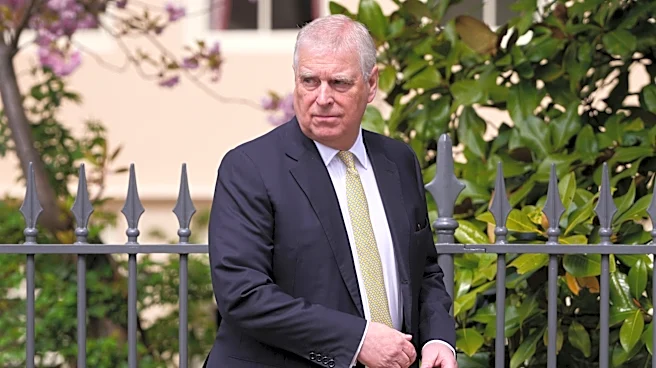









What's Happening?
The British government has released documents regarding Andrew Mountbatten-Windsor's appointment as a trade envoy in 2001. The files reveal that there was no formal vetting process for his appointment, which was reportedly influenced by the late Queen
Elizabeth II. Mountbatten-Windsor served in this role until 2011, stepping down due to his connections with Jeffrey Epstein. The release of these documents follows a request from opposition lawmakers for transparency. The documents also show that the late Queen was keen on her son taking a prominent role in promoting national interests, despite the lack of formal due diligence.
Why It's Important?
The release of these documents is significant as it sheds light on the processes and influences behind royal appointments to public roles. The lack of vetting for Mountbatten-Windsor's appointment raises questions about the transparency and accountability of such positions. This development is particularly relevant given the ongoing scrutiny of Mountbatten-Windsor's ties to Epstein, which have already led to reputational damage for the royal family. The situation underscores the importance of due diligence in public appointments, especially when they involve sensitive roles like trade envoys.
What's Next?
The release of these documents may lead to further calls for transparency and reform in the appointment processes for public roles involving the royal family. There could be increased pressure on the British government to ensure that future appointments are subject to rigorous vetting. Additionally, the ongoing legal and public scrutiny of Mountbatten-Windsor's past actions may continue to impact the royal family's public image. The government and the royal family may need to address these issues to restore public confidence.