





What's Happening?
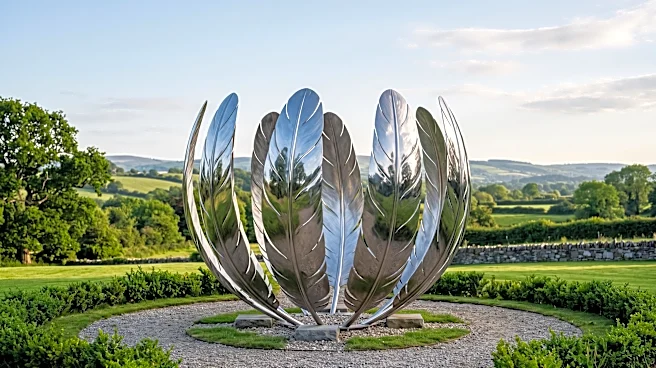
In 1847, during the devastating Great Famine in Ireland, the Choctaw people, despite enduring their own hardships from the Trail of Tears, raised approximately $170 to aid the starving Irish population. This act of generosity, occurring over a century
ago, has been commemorated with a sculpture titled 'Kindred Spirits' in Midleton, County Cork, Ireland. The artwork consists of nine large stainless-steel eagle feathers arranged in a circle, forming a bowl shape that symbolizes food offered to the hungry. The sculpture serves as a permanent reminder of the Choctaw Nation's compassion and solidarity with the Irish people during a time of immense suffering for both communities. The Choctaw's contribution highlighted a profound act of humanity, demonstrating that even amidst their own struggles, they chose to extend help to others in need.
Why It's Important?
This historical event underscores the enduring power of humanitarian aid and cross-cultural solidarity, particularly when it originates from communities facing their own significant challenges. The Choctaw Nation's act of charity, though modest in monetary terms, represented a profound gesture of empathy and shared suffering. It highlights a universal lesson that compassion can transcend geographical and cultural boundaries, even in times of extreme adversity. For the U.S., this story reflects a significant moment in the history of Native American tribes, showcasing their resilience and capacity for generosity. It also serves as a powerful narrative of how historical acts of kindness can foster lasting international bonds and be recognized through public art, influencing contemporary discussions on humanitarian efforts and indigenous peoples' contributions.
Beyond the Headlines
The 'Kindred Spirits' sculpture and the story it represents delve into deeper implications concerning historical memory, ethical responsibility, and the nature of human connection. It challenges the notion that one must be free from hardship to make a difference, instead emphasizing that understanding suffering can often be the catalyst for profound acts of compassion. This narrative offers a powerful counter-story to historical accounts that often focus solely on conflict or victimhood, highlighting moments of mutual aid and empathy between diverse groups. It also prompts reflection on the ongoing relevance of such historical acts in today's world, encouraging a re-evaluation of what constitutes true wealth and the importance of collective care. The artwork itself, through its symbolism, reinforces the idea that shared humanity can create enduring legacies of goodwill.