



What's Happening?
A recent study published in the journal Science highlights a significant and accelerating decline in North American bird populations, primarily attributed to intensive agricultural practices and rising temperatures. The research, conducted by ecologists
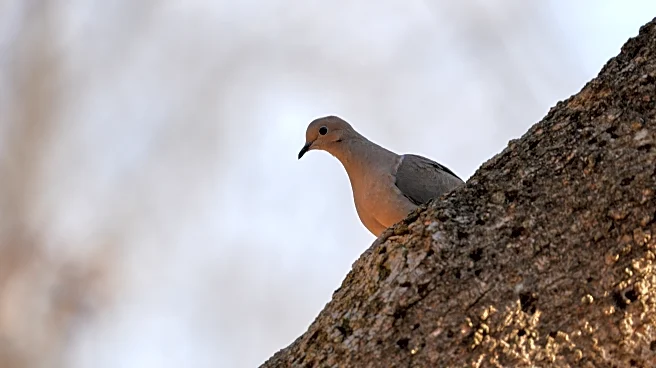
including Marta Jarzyna and Francois Leroy from Ohio State University, examined 261 bird species and found that nearly half are experiencing statistically significant population losses. The study notes that more than half of these declining species are seeing their losses accelerate since 1987. While forest birds are somewhat stable, species like the European starling and American crow, which are not yet at risk of extinction, are declining rapidly. The study also identifies the Mid-Atlantic, Midwest, and California as regions with the most significant acceleration in bird population decline.
Why It's Important?
The findings underscore the broader environmental implications of agricultural intensification and climate change. The decline in bird populations serves as an indicator of environmental health, suggesting that ecosystems are becoming increasingly inhospitable not only for birds but potentially for humans as well. Birds play crucial roles in ecosystems, such as pest control, pollination, and seed dispersal, and their decline could disrupt these ecological services. The study's results highlight the urgent need for changes in agricultural practices and climate policies to mitigate further environmental degradation. The loss of bird populations could also impact human well-being, as birds contribute to biodiversity and the aesthetic and recreational value of natural environments.
What's Next?
The study suggests a need for immediate action to address the factors contributing to bird population declines. This includes re-evaluating agricultural practices, such as reducing pesticide and fertilizer use, and implementing more sustainable farming methods. Additionally, efforts to combat climate change by reducing greenhouse gas emissions are critical. Conservation strategies may also involve protecting and restoring bird habitats and promoting biodiversity-friendly land use. Policymakers, environmental organizations, and the agricultural sector will need to collaborate to develop and implement effective solutions to halt and reverse these trends.
Beyond the Headlines
The decline in bird populations raises ethical and cultural questions about humanity's responsibility to preserve biodiversity. It also highlights the interconnectedness of human activities and natural ecosystems. The study's findings could lead to increased public awareness and advocacy for environmental conservation. Long-term, the decline in bird populations could signal broader ecological shifts, potentially affecting other species and leading to unforeseen consequences for global biodiversity.