







What's Happening?
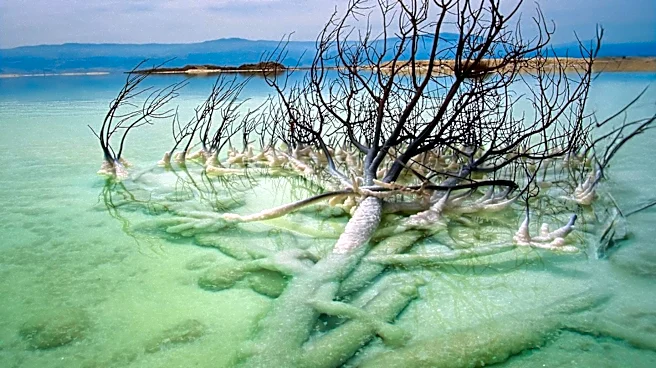
Decreasing water levels, influenced by seasonal temperatures, have led to the formation of unique crystallized salt structures at Tuz Lake in Aksaray, Türkiye. These formations, described as snow-like geological features, are drawing photographers to the region.
After the surface water evaporated in the Eskil region of the lake, distinct solid formations, including mushroom-shaped structures, became visible. The appearance of these formations changes throughout the day depending on the sun's angle, offering varying visual effects to visitors walking across the dry lakebed. Photographer Nazmi Meral noted that he monitored the area for approximately a month to capture the dynamic landscape resulting from the interaction of nature, water, and salt. Local resident Mustafa Güdendede highlighted that these newly formed, textured salt masses are a departure from the usual flat, watery surface, creating unmissable scenery for photography enthusiasts.
Why It's Important?
The natural phenomenon at Tuz Lake underscores the significant impact of environmental conditions, specifically water level fluctuations and seasonal temperatures, on geological formations. This event highlights the lake's ecological and aesthetic value, attracting tourism and photography, which can provide economic benefits to the local community in Aksaray, Türkiye. The lake is not only a visual spectacle but also the second largest lake in Türkiye and one of the world's largest hypersaline lakes, supplying a substantial portion of the country's salt needs. Furthermore, it serves as a critical natural breeding ground for flamingos and migratory birds during spring, before the water recedes to expose the salt crust. The unique formations, compared to the famous travertines of Pamukkale by local resident Mehmet Meral, emphasize the region's natural heritage and potential for ecotourism.
What's Next?
The crystallized salt formations at Tuz Lake are expected to continue attracting photographers and tourists as long as the environmental conditions that create them persist. The dynamic nature of these formations, which change with the sun's angle and the interaction of water and salt, suggests that the landscape will offer new photographic opportunities with each visit. Local authorities and tourism bodies may leverage this natural attraction to promote the region, potentially leading to increased visitor numbers and economic activity. Continued monitoring of water levels and seasonal temperatures will be crucial to understand the long-term sustainability and evolution of these unique geological features. The lake's role as a breeding ground for migratory birds also implies that conservation efforts will need to balance tourism with ecological preservation.
Beyond the Headlines
The 'snow-like' appearance of the salt formations at Tuz Lake offers a compelling example of how natural processes can create landscapes that mimic familiar sights, in this case, snow. This phenomenon can spark broader discussions about the diverse forms of natural beauty and the impact of climate and geological factors on Earth's surface. The lake's dual role as a significant salt producer and a vital ecological habitat for flamingos and migratory birds highlights the complex interplay between economic utility and environmental conservation. The increasing interest from photographers and tourists also raises questions about sustainable tourism practices in fragile ecosystems, ensuring that the influx of visitors does not negatively impact the delicate balance of the lake's environment and its wildlife. The comparison to Pamukkale's travertines suggests a potential for Tuz Lake to become another iconic natural landmark, drawing global attention to Türkiye's geological wonders.