









What's Happening?
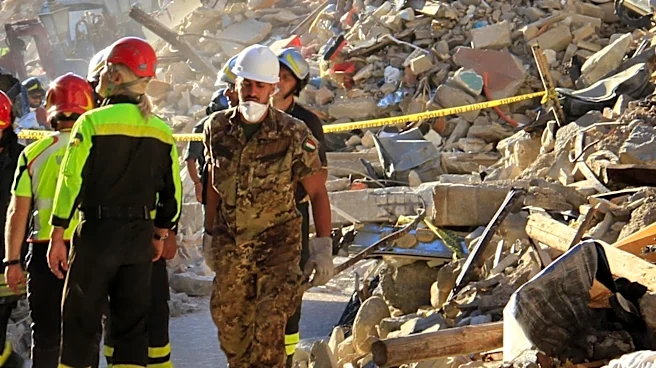
A magnitude 7.1 earthquake in southwestern Japan has resulted in 34 confirmed deaths, with rescue operations ongoing. The quake, which struck the island of Kyushu, has left over 79,000 homes without water and more than 2,700 without electricity. Thousands
of residents are staying in shelters or their vehicles due to the damage and ongoing aftershocks. The disaster has also caused a fuel shortage, complicating efforts to maintain air conditioning in the sweltering summer heat. Rescue teams are focusing on areas with significant damage, including a collapsed shopping mall and a factory with a toppled chimney.
Why It's Important?
The earthquake in Japan highlights the devastating impact of natural disasters on communities, infrastructure, and public health. The widespread power and water outages, coupled with the fuel shortage, pose significant challenges for both residents and emergency responders. The situation underscores the importance of disaster preparedness and resilient infrastructure to mitigate the effects of such events. Additionally, the international community often looks to Japan's response to natural disasters as a model, given the country's experience and expertise in dealing with earthquakes.