

What's Happening?
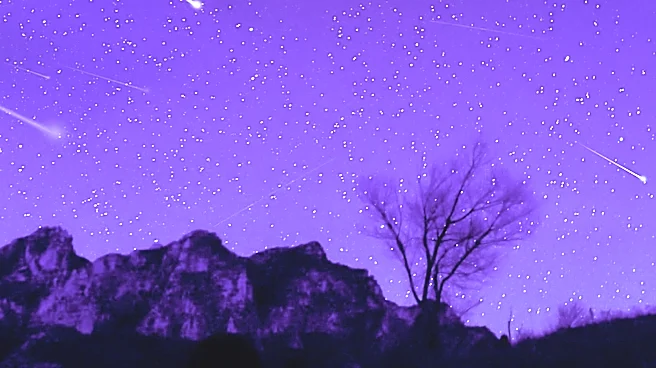
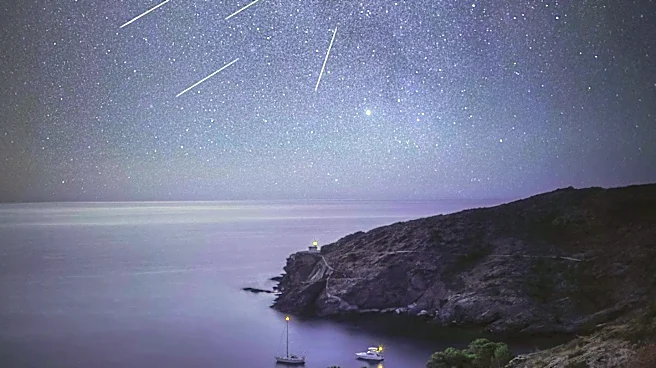
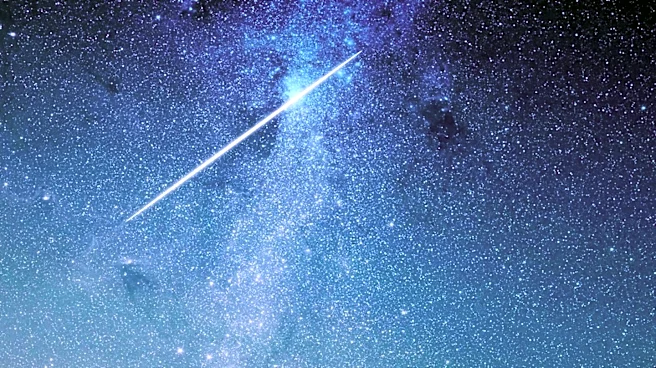
The Perseid meteor shower is set to provide a stunning celestial display across the northern hemisphere, with peak visibility expected from Wednesday night into Thursday morning. According to NASA, ideal conditions could allow observers to see between
50 to 100 meteors per hour. The American Meteor Society suggests that rural areas in the U.S. might witness 30 to 50 meteors per hour. This annual event occurs when Earth passes through debris left by comet 109P/Swift-Tuttle, which orbits the sun every 133 years. The Perseids are renowned for their bright fireballs and have been observed for over 2,000 years. This year, the new moon phase will enhance visibility by reducing moonlight interference, making it easier to see the meteors. Astronomers recommend finding a dark spot away from city lights and allowing eyes to adjust to the darkness for optimal viewing.
Why It's Important?
The Perseid meteor shower is a significant astronomical event that captivates both amateur and professional astronomers. It offers a unique opportunity for public engagement with science, encouraging people to explore the night sky and learn about celestial phenomena. The event also highlights the importance of preserving dark skies, free from light pollution, to fully appreciate such natural spectacles. For the scientific community, meteor showers like the Perseids provide valuable data on cometary debris and its interaction with Earth's atmosphere. This can enhance understanding of cometary behavior and the solar system's history. Additionally, the widespread interest in the Perseids can inspire future generations to pursue careers in astronomy and related sciences.
What's Next?
As the Perseid meteor shower peaks, astronomers and enthusiasts will continue to monitor and document the event. Observations will contribute to ongoing research on meteor showers and their origins. Public interest in the Perseids may lead to increased participation in astronomy clubs and educational programs. Looking ahead, the next significant meteor shower, the Geminids, will occur in December, offering another opportunity for skywatchers to observe meteor activity. Meanwhile, efforts to combat light pollution may gain momentum, as more people recognize the impact of artificial lighting on night sky visibility.