



What's Happening?
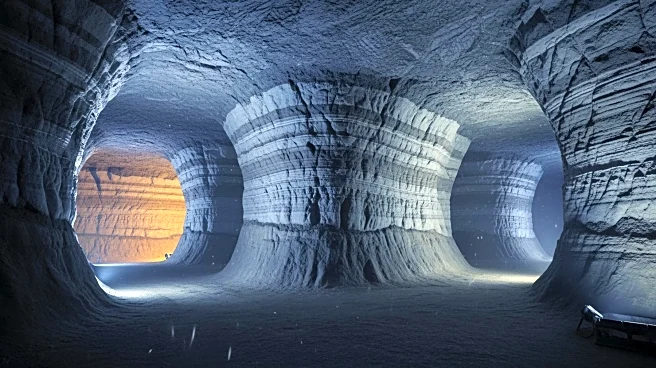
Scientists have discovered massive tunnels in southern Brazil and northern Argentina that appear to have been created by giant, extinct ground sloths. These tunnels, which are not the result of human or geological processes, stretch over 600 yards and are large
enough for an adult to walk through. The tunnels feature claw marks that match the long, curved claws of sloths, suggesting that these animals dug the tunnels as shelters. The research, led by Heinrich Frank, has mapped over 1,500 such burrows, providing new insights into the behavior of these ancient creatures.
Why It's Important?
The discovery of these tunnels offers valuable insights into the behavior and habitat of extinct megafauna, particularly giant ground sloths. Understanding the role these animals played in shaping their environment can inform current ecological studies and conservation efforts. The tunnels also provide a unique form of trace fossil, preserving evidence of ancient activity that complements traditional fossil records. This research enhances our understanding of the Pleistocene era and the interactions between humans and megafauna, shedding light on how these relationships influenced the landscape.
What's Next?
Further research is likely to focus on mapping additional tunnels and analyzing their distribution to gain a deeper understanding of the ecological impact of giant sloths. Scientists may also explore the potential connections between these tunnels and other fossil records to reconstruct a more comprehensive picture of Ice Age ecosystems. This ongoing research could contribute to broader studies on the effects of megafauna extinction on environmental changes and biodiversity.