



What's Happening?
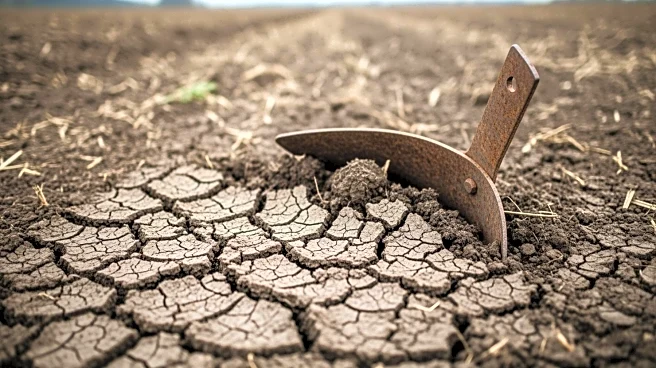
Researchers from the University of Washington have conducted a study revealing the detrimental effects of overplowing on soil health. Utilizing seismic tools typically used for earthquake monitoring, the team examined soil moisture and water retention
at an experimental farm in the United Kingdom. The study found that tilling disrupts the soil's capillary networks, which are crucial for water absorption, leading to increased erosion and flood risks. The research involved placing fiber optic cables alongside fields to record ground motion and assess the impact of different tillage and compaction levels. The findings highlight the need for regenerative agricultural practices that minimize soil disturbance.
Why It's Important?
The study's findings are significant for the agricultural sector, particularly in the U.S., where soil health is critical for sustainable farming. Overplowing can lead to soil degradation, affecting crop yields and increasing vulnerability to environmental changes. By understanding the impact of tilling on soil structure, farmers can adopt practices that enhance soil resilience and water management. This research also offers a cost-effective method for real-time monitoring of soil conditions, which could improve flood management and inform better agricultural practices. The implications extend to policy-making, encouraging a shift towards sustainable farming techniques.
What's Next?
The research suggests a potential shift in agricultural practices towards less invasive methods to preserve soil health. Farmers may begin to adopt these findings by integrating fiber optic monitoring systems to better manage their land. Additionally, the study could influence agricultural policies, promoting incentives for practices that reduce soil disturbance. As awareness grows, there may be increased collaboration between scientists and farmers to develop innovative solutions for soil management. The study also opens avenues for further research into the long-term benefits of regenerative agriculture.