






What's Happening?
A new book titled 'Betrayal: Trump, Putin and The New Age of Conquest' by Luke Harding, portrays President Trump's interactions with Russian President Vladimir Putin, including an 'almost reverential' treatment during a visit to Alaska. The book details
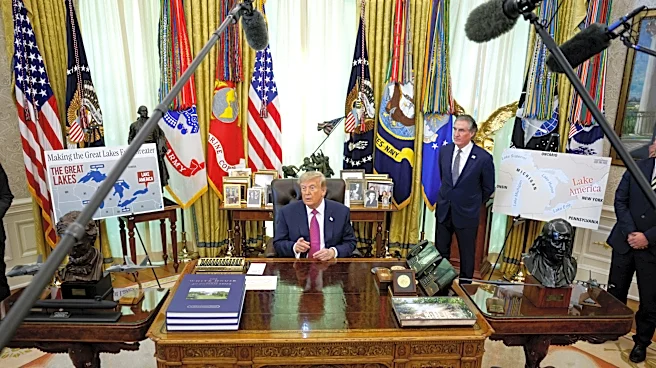
President Trump's 'pro-Putin and anti-Zelenskiy moves,' such as a 'bullying ambush' of Ukrainian President Zelenskiy in the Oval Office and a transactional approach that prioritized potential enrichment from Ukraine's lithium deposits over the suffering of its people. Harding's work also touches on President Trump's address at Davos, which was met with silence from other politicians, and mentions NATO's Mark Rutte as a 'Trump-whisperer.' The book, while colorful and entertaining, includes passages of 'padding' and 'purple prose,' alongside a notable fascination with ornithological details.
Why It's Important?
This portrayal of President Trump's foreign policy approach, particularly concerning Russia and Ukraine, is significant as it offers a critical perspective on his administration's diplomatic strategies. The book suggests a transactional and potentially deferential stance towards Russia, which could have implications for U.S. alliances and international relations. The emphasis on personal enrichment possibilities over humanitarian concerns in Ukraine, as alleged, raises questions about the ethical underpinnings of foreign policy decisions. Such narratives can influence public perception of past administrations and shape future political discourse regarding U.S. engagement on the global stage, particularly in regions of geopolitical tension like Eastern Europe.
What's Next?
The publication of 'Betrayal' is likely to fuel ongoing discussions and debates surrounding President Trump's foreign policy legacy and his relationship with Russia. Political commentators, historians, and the public will likely analyze the book's claims, potentially leading to further scrutiny of past events and decisions. The book's content could also be referenced in future political campaigns or policy discussions, particularly those concerning U.S. involvement in international conflicts and alliances. While the book itself is a retrospective account, its insights may inform future approaches to diplomacy and international relations, especially regarding the balance between national interests and global humanitarian concerns.
Beyond the Headlines
Beyond the immediate political implications, Harding's book delves into the deeper ethical and cultural dimensions of leadership and international relations. The characterization of President Trump as 'the mad emperor' and the suggestion of a less ideological, more transactional relationship with Moscow, hints at a shift in the traditional understanding of U.S. foreign policy motivations. The book implicitly raises questions about the role of personal interests and perceived enrichment opportunities in shaping national policy, potentially challenging the conventional view of diplomacy driven solely by strategic national interests. This perspective could contribute to a broader re-evaluation of leadership qualities and the impact of individual personalities on global affairs.