



What's Happening?
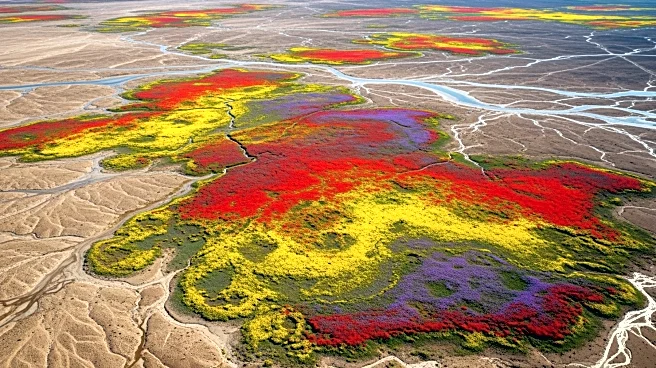
NASA's Earth-observing satellites have captured a rare desert bloom in Australia's Lake Eyre Basin following record-breaking floods in March 2025. The usually arid desert surrounding Cooper Creek transformed into a green corridor stretching hundreds of
miles due to intense rainfall. This event, monitored by NASA's Earth Observatory team, provided scientists with an opportunity to study how rare flood pulses can awaken dormant ecosystems. The floodwaters, which submerged towns and grazing lands, were documented using false-color satellite imagery, revealing vibrant green vegetation and electric blue water. The flood reached far downstream, setting records across the Lake Eyre Basin, and triggered a rapid ecological response, including the hatching of dormant eggs of crustaceans and invertebrates.
Why It's Important?
The transformation of the desert into a vibrant ecosystem highlights the importance of satellite technology in tracking environmental changes. This event offers insights into the ecological dynamics of arid river systems, which are defined by boom-and-bust cycles. The flood's impact on biodiversity is significant, as it supports fish breeding and plant growth, contributing to the long-term health of the ecosystem. The ability to monitor such events helps scientists and conservationists prepare for ecological changes and manage natural resources effectively. Additionally, the flood's impact on grazing lands underscores the challenges faced by local communities in adapting to extreme weather events.
What's Next?
The flood's aftermath will require ongoing monitoring to assess the recovery of affected ecosystems and grazing lands. Scientists will continue to use satellite imagery to track water pulses and their impact on sensitive ecological zones. The event may prompt discussions on water management and conservation strategies to mitigate the effects of future floods. Local communities and park managers will need to adapt to the changes in biodiversity and plan for potential tourism opportunities. The flood's long-term impact on soil and vegetation will be a focus of research and restoration efforts.
Beyond the Headlines
The flood event raises questions about the resilience of arid ecosystems and the role of natural cycles in maintaining biodiversity. The Lake Eyre Basin's largely unmodified state, free from major dams or irrigation schemes, allows for natural flood pulses that revive remote ecosystems. This highlights the importance of preserving natural river systems and the potential consequences of human interference. The event also underscores the need for international cooperation in environmental monitoring and conservation efforts.