






What's Happening?
Health officials in Suffolk County have announced three probable cases of tularemia, commonly known as 'rabbit fever'. This bacterial disease is spread through tick and deer fly bites, as well as through contact with infected rabbits, hares, and rodents.
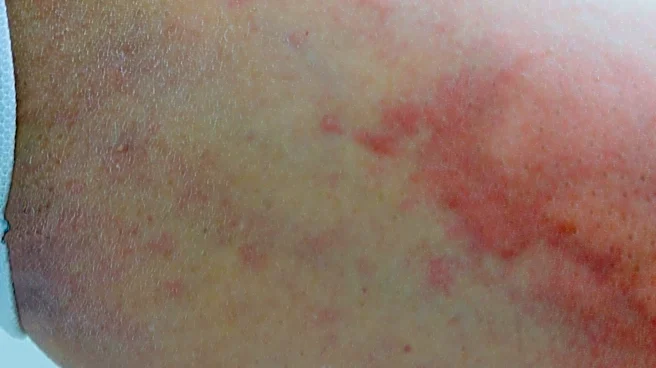
The Suffolk County Department of Health Services (SCDHS) stated that confirmation of tularemia requires a combination of laboratory testing and specific clinical or epidemiologic criteria. One of the affected individuals is nine-year-old John Detmer, who became ill after playing in his yard, which is frequented by wild rabbits. Despite not directly touching the rabbits, John was bitten by a tick, leading to severe symptoms including head and neck pain and a prolonged fever. Tularemia is rare, with only 196 cases reported in the U.S. in 2023, and is most common from May to September. Suffolk County had four cases in 2024, the highest since 2014.
Why It's Important?
The emergence of tularemia cases in Suffolk County highlights the ongoing public health challenge posed by tick-borne diseases. Tularemia, while treatable with antibiotics, can be life-threatening if not addressed promptly. The increase in cases underscores the need for public awareness and preventive measures, such as using insect repellent and avoiding contact with wild animals. The situation also reflects broader concerns about the spread of vector-borne diseases, which can have significant health and economic impacts. The Centers for Disease Control and Prevention (CDC) emphasizes the importance of preventive strategies to mitigate the risk of such infections, which can strain healthcare resources and affect community well-being.
What's Next?
Health officials will continue to monitor the situation and conduct further testing to confirm the suspected cases of tularemia. Public health campaigns may be intensified to educate residents about the risks of tick-borne diseases and the importance of preventive measures. The CDC's recommendations, including the use of insect repellent and protective clothing, will likely be reinforced. Additionally, there may be increased surveillance and research efforts to better understand the spread and control of tularemia and other similar diseases. Community engagement and cooperation will be crucial in managing the public health response.