








What's Happening?
Hawaii Governor Josh Green, along with the Department of Agriculture and Biosecurity (DAB) and the Department of Accounting and General Services, has launched an Emergency Farmer Relief (EFR) grant program. This initiative aims to assist farmers and ranchers
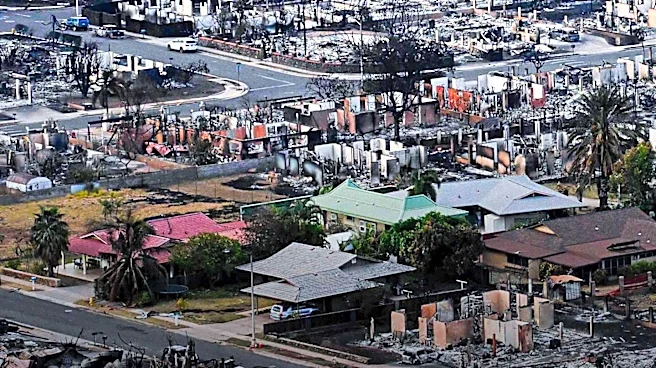
across Hawaii who were severely impacted by three major storms—Lala, Lowell, and Moke—which struck the islands from mid-August through early September. The storms caused significant damage, destroying homes, roads, and agricultural lands. Eligible applicants, including farms, orchards, and ranches, can receive up to $1,500 in relief funding. The online application portal opened on November 2 and will accept submissions until January 29, 2027. Funds will be distributed on a first-come, first-served basis due to limited availability, with checks expected to be available for pickup starting early to mid-January.
Why It's Important?
The EFR grant program is crucial for the recovery of Hawaii's agricultural sector, which is vital to the state's economy and food security. Natural disasters can devastate agricultural operations, leading to significant financial losses, damage to infrastructure, and disruption of food supply chains. By providing direct financial assistance, the program helps farmers and ranchers repair damages, replace equipment, and resume their essential work. This support not only aids individual businesses but also contributes to the overall resilience of Hawaii's agricultural industry, ensuring that local food production can continue. The program's focus on quick disbursement of funds reflects lessons learned from previous relief efforts, such as the Kona low storms, where timely aid proved critical.
What's Next?
Applicants will need to submit a W-9, Schedule C, or Schedule F from their tax returns as proof of their farming or ranching activities. The DAB website will provide a link for applications, and applicants will be informed about pickup locations for their checks. The program's success will depend on the efficiency of the application and distribution process, as well as the adequacy of the allocated funds to meet the widespread needs of the agricultural community. Future considerations may include evaluating the long-term impacts of these grants and potentially developing more robust disaster preparedness and relief mechanisms for the agricultural sector in Hawaii.
Beyond the Headlines
The implementation of the EFR program underscores the increasing frequency and intensity of natural disasters, highlighting the vulnerability of agricultural systems. This initiative reflects a broader trend of governmental and community efforts to support local food producers in the face of climate-related challenges. Beyond immediate financial relief, such programs contribute to food sovereignty and reduce reliance on external food sources, which is particularly important for island communities like Hawaii. The program also emphasizes the administrative challenges of disaster relief, requiring clear documentation and efficient distribution to ensure aid reaches those who need it most, while also balancing the need for speed with accountability.